
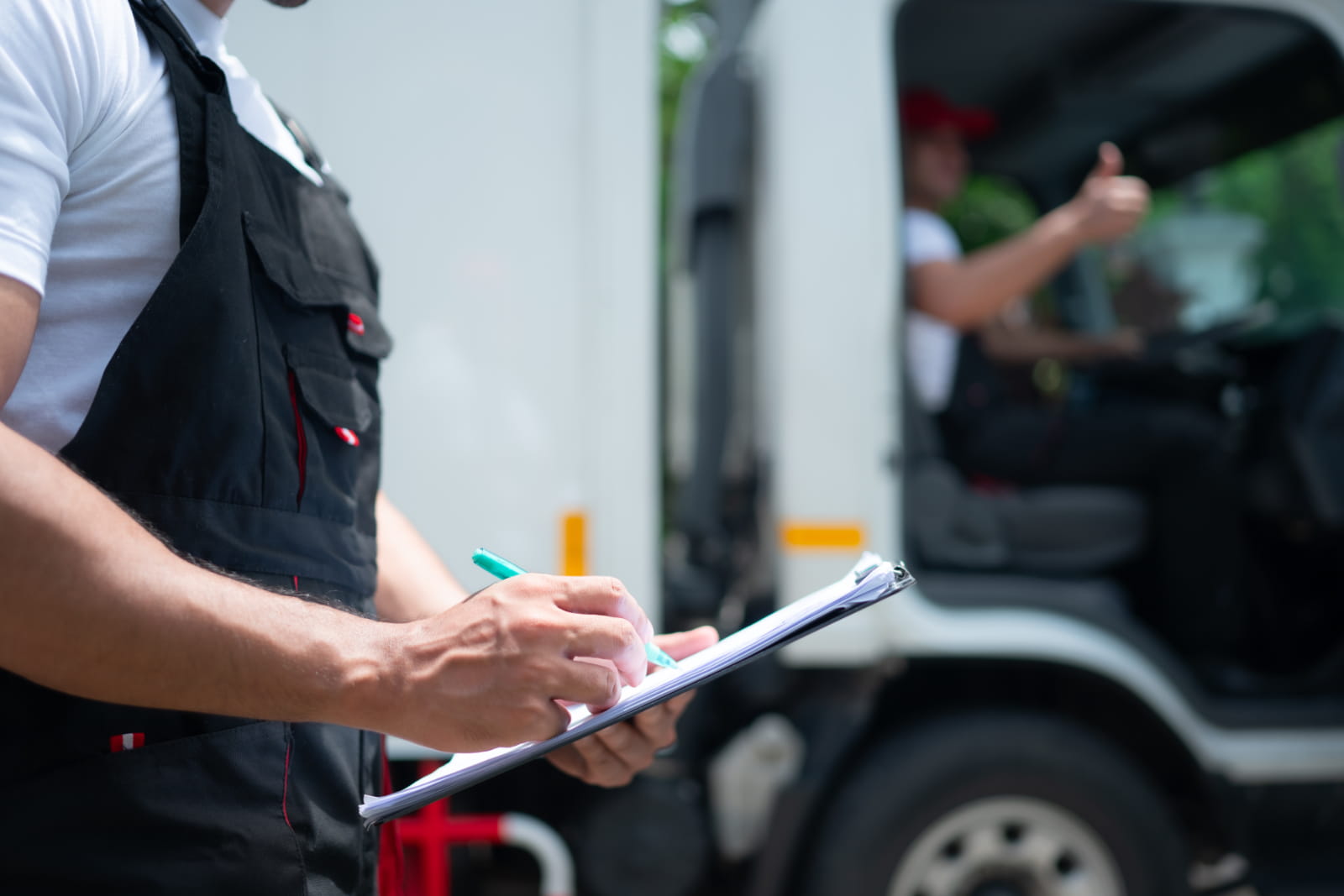
How 24-Hour Breakdown Assistance Works
When a tail lift stops working during a delivery, the problem can quickly affect the rest of the day’s schedule. 24-hour breakdown assistance gives businesses access to specialist support whenever a fault occurs, including outside normal working hours. For fleets that depend on tail lifts to load and unload goods safely, that access can make the difference between a manageable delay and a vehicle being out of action for much longer.
The scale of commercial road transport makes reliability especially important. In the UK alone, heavy goods vehicles lifted around 1.59 billion tonnes of goods during 2024, up 2% from the previous year. When equipment fails in an operation working at that scale, downtime can affect drivers, customers, delivery windows and warehouse schedules. Knowing what happens during a breakdown call helps businesses respond quickly and safely.
What Is 24-Hour Breakdown Assistance?
24-hour breakdown assistance is a support service for situations where a tail lift develops an unexpected hydraulic, electrical or mechanical problem. Rather than waiting for the next working day to begin arranging help, the fault can be reported when it happens. The aim is to assess the situation, determine what support is required and reduce unnecessary vehicle downtime.
That matters because breakdowns are not only an inconvenience. Workplace safety figures for 2024/25 show that approximately 680,000 workers sustained non-fatal injuries at work, while 59,219 employee injuries were serious enough to be formally reported. A malfunctioning lifting platform should therefore never be treated as something an operator simply needs to work around.
Good breakdown support focuses on restoring safe operation rather than getting a vehicle moving at any cost. Depending on the fault, a technician may be able to complete the repair at the vehicle’s location. If that is not possible, the equipment can be assessed and the business can make an informed decision about repairs, recovery or alternative delivery arrangements.
How the Breakdown Process Starts
The breakdown process begins as soon as the driver or fleet manager reports the fault. Clear information helps the support team understand what has happened and what might be required. The vehicle’s location, tail-lift type and a simple explanation of the symptoms are useful starting points.
Drivers should avoid experimenting with the equipment while reporting the problem. If a platform is moving unevenly, refusing to raise, leaking fluid or experiencing an electrical fault, repeatedly operating the controls may increase the risk of further damage or injury.
Useful information to have ready includes:
- The vehicle’s exact location
- The vehicle and tail-lift details
- A description of what happened before the fault
- Whether the platform is raised, lowered or stuck between positions
- Any visible hydraulic leaks
- Any unusual noises or movements
- Whether the controls have lost power
- Whether cargo is currently on the platform
- Whether the vehicle is blocking an operational area
Once this information has been provided, the problem can be assessed more effectively. Good information may also help the technician arrive better prepared, particularly where a likely electrical, hydraulic or mechanical issue can be identified from the symptoms.
The most important thing during this stage is safety. The lift should normally remain out of use until it has been properly assessed. With 511,000 workers affected by work-related musculoskeletal disorders in Great Britain during 2024/25, trying to compensate for failed lifting equipment through unnecessary manual handling is not a sensible alternative.
How Mobile Tail-Lift Repairs Work
Mobile repairs allow a technician to inspect a tail lift where the vehicle has stopped instead of automatically requiring the truck to visit a workshop. That can be particularly valuable when the lift itself is the reason cargo cannot be unloaded or normal operations cannot continue.
The technician’s first job is to establish what has failed. Tail lifts combine hydraulic, mechanical and electrical systems, so a symptom in one part of the lift does not always mean that component is the root cause.
A mobile assessment may involve checking:
- Hydraulic cylinders, pipes and connections
- Hydraulic fluid and signs of leakage
- Electrical connections and power supply
- Controls, switches and operating functions
- Platform movement and alignment
- Mechanical components and mounting points
- Safety systems
- Visible wear or damage
- The condition of related components around the original fault
If a safe repair can be completed at the vehicle’s location, the technician can work towards returning the lift to service there. This avoids moving the vehicle unnecessarily and can reduce the amount of disruption caused by the original fault.
That ability is valuable in a freight sector handling enormous volumes of goods every day. GB-registered heavy goods vehicles moved 1.59 billion tonnes of goods in the UK during 2024. In operations where trucks may have tightly planned routes and multiple drops, reducing even one unnecessary workshop journey can help protect the rest of the schedule.
Why Fast Diagnosis Matters
Speed matters during a breakdown, but an accurate diagnosis matters just as much. Replacing the first component that appears faulty without understanding the cause can lead to repeat problems. A proper inspection considers the hydraulic, electrical and mechanical systems together before deciding what needs attention.
The wider cost of lost working time shows why getting repairs right matters. Work-related illness and workplace injury resulted in an estimated 40.1 million working days being lost during 2024/25. Although that figure covers workplaces far beyond transport, it shows how quickly operational disruption linked to health, safety and equipment can create significant business consequences.
Accurate diagnosis also gives fleet managers useful information for future maintenance. A failed switch may be an isolated problem, while abnormal platform movement could point to wear elsewhere. Understanding the root cause helps businesses decide whether further servicing should be scheduled before the same lift returns to intensive daily use.
How 24-Hour Breakdown Assistance Reduces Downtime
One of the main benefits of 24-hour breakdown assistance is that the response process can begin immediately instead of being delayed until normal working hours. A truck may still be able to drive when its tail lift fails, but that does not mean it can complete the deliveries it was sent to perform.
Road freight remains a major part of everyday commercial activity. The 1.59 billion tonnes of goods lifted by GB-registered HGVs in 2024 represented a 2% increase from 2023, showing just how much material depends on road-based logistics. When a tail lift is essential to unloading, a single equipment failure can interrupt several planned drops rather than just one task.
Rapid support gives fleet managers more options. If the lift can be repaired on site, the vehicle may return to work without a full workshop visit. If it cannot, an early diagnosis still helps the business make alternative arrangements sooner. The value therefore comes from reducing uncertainty as well as reducing repair time.
What to Do While Waiting for Assistance
Once help has been arranged, the priority should be keeping the driver, cargo and surrounding area safe. A damaged or unpredictable platform should not be treated as usable simply because a delivery is urgent.
This is particularly important where staff might otherwise be tempted to move heavy cargo manually. Work-related musculoskeletal disorders affected an estimated 511,000 people in Great Britain in 2024/25, making manual-handling risk a serious operational issue rather than a minor inconvenience.
While waiting for assistance:
- Stop operating the faulty tail lift
- Keep people clear of unsupported platforms
- Do not stand underneath the lifting platform
- Avoid moving cargo across unstable equipment
- Do not attempt repairs without suitable training
- Move the vehicle to a safer location if this can be done safely
- Keep the working area clear for the technician
- Have vehicle and lift information ready
- Record any useful details about how the fault occurred
The temptation to improvise can be strong when a customer is waiting, but a delayed delivery is preferable to creating an unsafe lifting or manual-handling situation. Keeping the equipment isolated also prevents repeated operation from potentially making the fault worse.
The driver can use the waiting time productively by gathering maintenance records, checking when the lift was last serviced and noting exactly what happened before it stopped working. That information can help the technician build a clearer picture once the assessment begins.
Why Preventative Maintenance Still Matters
Emergency assistance is valuable, but it should never become a substitute for planned maintenance. Routine servicing creates an opportunity to find hydraulic leaks, wear, electrical problems and damaged components before they develop into breakdowns during working hours.
The financial consequences of poor workplace health and safety can be substantial. The estimated cost of injuries and ill health arising from current working conditions reached £22.9 billion in 2023/24 in Great Britain. While this figure covers the wider economy, it reinforces why safety, maintenance and early intervention should be treated as business priorities rather than optional expenses.
The strongest approach combines preventative maintenance with 24-hour breakdown assistance. Servicing aims to reduce the chance of unexpected failure, while breakdown support provides a safety net for problems that cannot reasonably be predicted. Maintenance records can also help technicians identify recurring issues and make better-informed repair decisions.
Choosing the Right Tail Lift Can Reduce Future Problems
Reliability begins with choosing equipment suited to the work. Tail lifts should be matched to the vehicle, load, platform requirements, working environment and frequency of use. Simply choosing the largest lifting capacity available can add unnecessary weight or result in equipment that does not properly match the operation.
The available capacity ranges show why specification matters. Dhollandia SA’s cantilever range covers approximately 500 kg to 3,000 kg, while its column lifts cater for loads from around 750 kg to 3,000 kg. Its slider range also includes options reaching 3,000 kg, while fold-away models cover commercial applications including capacities between 750 kg and 2,000 kg.
The lift design is just as important as its capacity. Cantilever lifts provide a versatile rear-mounted option, while slider and fold-away designs can keep the rear of the vehicle clear when the lift is not required. Column lifts provide another option for applications needing stable vertical movement. Correct specification helps the lift work with the operation rather than against it.
What Dhollandia SA Offers You
At Dhollandia SA, we support customers throughout the working life of their tail lifts. We were established in 2018 as the authorised Dhollandia dealer in South Africa, and our team brings more than 20 years of combined experience and expertise to the field.
We also provide a broad product range, with more than 100 tail lifts to choose from across different vehicle and operating requirements. That allows us to look at the vehicle, load, route and working conditions before helping customers identify an appropriate solution.
Our support includes:
- 24-hour national breakdown assistance
- Tail-lift servicing and maintenance
- Repairs
- Warranty assistance
- Installation support
- Advice on selecting the correct lift
- Cantilever lifts
- Slider lifts
- Fold-away lifts
- Column lifts
- Support for mixed fleet requirements
- Access to service coverage across South Africa
We have branches in Johannesburg, Durban, Cape Town and Port Elizabeth, supported by wider service coverage across South Africa and neighbouring areas. This national footprint helps us provide practical support to businesses operating vehicles across different regions.
Most importantly, we see breakdown support as part of a wider service relationship. Supplying the right lift, fitting it correctly, maintaining it properly and supporting it when something goes wrong all contribute to dependable long-term operation.
How to Prepare for a Tail-Lift Breakdown
Businesses do not need to wait for a breakdown before deciding what should happen next. A simple response procedure can make the first few minutes of an incident much easier for drivers, fleet managers and the technical team providing assistance.
Preparation also supports safer decision-making. With 680,000 workers reporting non-fatal workplace injuries during 2024/25, clear procedures matter when equipment suddenly stops operating as intended. Drivers should know that protecting the delivery schedule never takes priority over using lifting equipment safely.
A basic breakdown procedure should cover:
- Who drivers should contact
- Where vehicle information is stored
- Where tail-lift details can be found
- How to describe common fault symptoms
- When the equipment must be taken out of service
- How to secure the immediate working area
- Where maintenance records are kept
- How to contact 24-hour breakdown assistance
- Who should update the customer if a delivery is delayed
Fleet managers should also keep service records organised and accessible. Previous repairs, recurring symptoms and recent maintenance can all provide useful clues during diagnosis and prevent time being wasted looking for information.
Finally, breakdown procedures should be included in operator training rather than left in a file that nobody reads. Drivers who already know what to do are more likely to stop unsafe operation quickly, report useful information and help the repair process start smoothly.
A Practical Solution
24-hour breakdown assistance gives businesses a practical way to deal with tail-lift faults when they happen, rather than waiting for normal workshop hours to begin taking action. With workplace injury, lost-time and freight statistics showing how important safe and reliable operations are, emergency support works best as part of a wider approach that includes correct lift selection, servicing, operator awareness and preventative maintenance.
At Dhollandia SA, we provide the equipment, expertise, maintenance, repairs and 24-hour breakdown assistance needed to support commercial fleets across South Africa. If a business needs help selecting a tail lift, arranging servicing or putting dependable breakdown support in place, get in touch with us today and we can help find the right solution for the operation.