
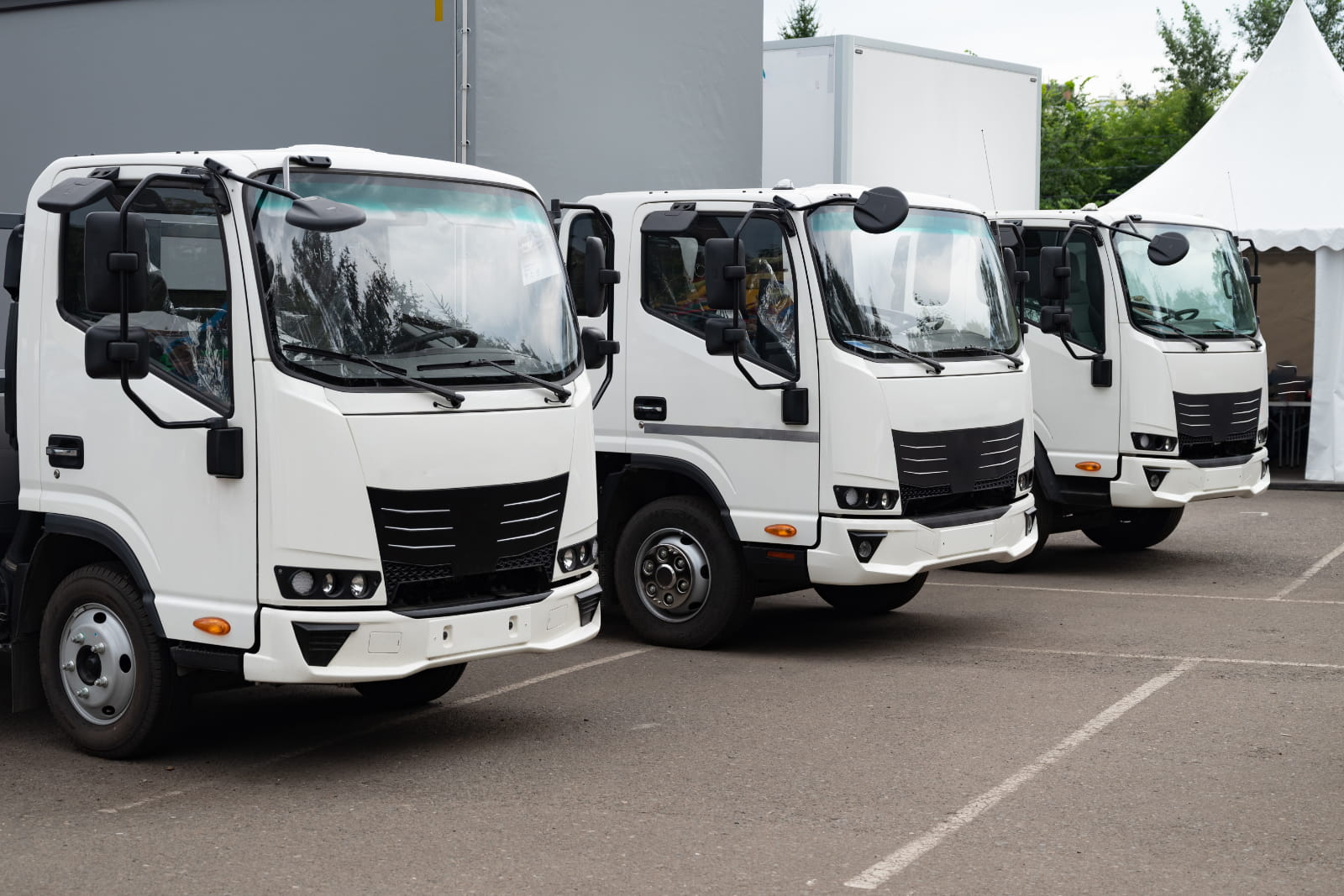
Why Vehicle Type Matters When Choosing a Tail Lift
Choosing the right lifting equipment starts with understanding the vehicle it needs to work with. When choosing a tail lift, factors such as vehicle size, gross vehicle weight, chassis configuration, rear clearance and available payload can all affect which lift will operate safely and efficiently. A system that works well on a heavy distribution truck may be unsuitable for a lighter commercial vehicle, even if both vehicles carry similar types of cargo.
The decision should therefore go beyond lifting capacity alone. Operators need to consider what the vehicle carries, how often the lift will be used, whether loading docks form part of the route and what ground conditions drivers regularly encounter. Matching the tail lift to the vehicle and its daily workload can help protect payload, reduce unnecessary wear and improve loading efficiency.
Why Vehicle Size Matters When Choosing a Tail Lift
Vehicle size influences how much weight and installation space are available for the lifting equipment. Smaller commercial vehicles usually have tighter payload limits, which means an unnecessarily heavy tail lift can reduce the amount of freight that can legally and practically be carried. Larger trucks may support heavier equipment, but chassis length, axle positioning and rear overhang still affect compatibility.
The difference between vehicle categories can be substantial. Industry guidance shows that lighter van chassis in the 3.5 to 8-tonne gross vehicle weight range commonly use tail lifts around 750 kg, while medium-duty trucks can accommodate systems in the region of 1,000 to 1,500 kg. Heavy trucks can support considerably larger units, with common lifting capacities reaching approximately 2,000 to 3,000 kg.
Dhollandia’s wider international range demonstrates just how varied commercial requirements can become, with lifting capacities stretching from approximately 150 kg to 16,000 kg across different applications. This does not mean the strongest lift is automatically the best option. Businesses should specify enough capacity for their heaviest realistic load without adding unnecessary equipment weight to the vehicle.
Consider Payload Before Selecting a Tail Lift
Every tail lift becomes part of the vehicle’s unladen weight, so its mass reduces the payload available for cargo. This is particularly important for vans and lighter trucks where payload margins may already be limited. Selecting a heavier system than the operation requires could mean carrying less freight on every journey.
Operators also need to calculate the full load placed on the platform rather than considering the goods alone. A pallet weighing 800 kg may be accompanied by a pallet truck, trolley or roll cage, increasing the actual load supported by the lift. Leaving an appropriate safety margin is preferable to operating close to the rated capacity during every loading cycle.
Vehicle payload is therefore a commercial consideration as well as a technical one. A fleet that loses several hundred kilograms of usable carrying capacity across multiple vehicles may require additional journeys to transport the same quantity of goods. When choosing a tail lift, the aim should be to balance adequate lifting performance with the vehicle’s ability to continue performing its primary transport function.
Match Cantilever Lifts to the Right Vehicles
Cantilever lifts are among the most versatile tail lift configurations for commercial vehicles. They remain mounted at the rear of the vehicle and move between load-floor height and ground level using hydraulic lifting mechanisms. Dhollandia SA’s featured cantilever range covers lifting capacities from approximately 500 kg to 3,000 kg, providing options for both lighter and heavier commercial applications.
Their ability to tilt towards the ground is particularly valuable where vehicles unload on uneven surfaces. This makes cantilever systems useful for multi-drop deliveries, general freight and operations that frequently work away from formal loading docks.
They are particularly suited to vehicles that:
- Make frequent ground-level deliveries
- Carry palletised or bulky freight
- Operate on uneven loading surfaces
- Require relatively quick lift deployment
- Perform multiple loading cycles during the working day
Because the platform is immediately available at the rear, operators do not normally need to slide or unfold a complex under-chassis mechanism before loading. That can make a noticeable difference for vehicles completing numerous stops each day, where small reductions in loading time accumulate across an entire route.
The trade-off is rear access. A cantilever platform normally occupies the rear of the vehicle when stowed, which may be less convenient for trucks that regularly reverse against loading docks. Businesses should therefore consider how often their vehicles use ground-level loading compared with dock loading before committing to this configuration.
Consider Slider Lifts for Vehicles That Need Clear Rear Access
Slider lifts retract beneath the vehicle when they are not required. This leaves the cargo opening relatively unobstructed and allows vehicles to move more easily between tail lift deliveries, forklift loading and loading-dock work. Dhollandia SA’s featured slider range covers approximately 1,000 kg to 3,000 kg.
This makes slider systems particularly useful for logistics vehicles that operate across several different loading environments. They provide significant lifting capacity while allowing operators to keep the rear opening accessible whenever the lift is stowed.
Slider lifts are particularly suitable for vehicles that:
- Frequently reverse into loading docks
- Need unobstructed access to rear doors
- Alternate between forklift and tail lift loading
- Carry palletised freight
- Operate in high-volume distribution environments
The vehicle must, however, provide enough space beneath the chassis for the platform and sliding mechanism. Axle position, rear overhang, suspension components and other equipment can all affect whether a slider lift can be installed correctly.
Ground clearance also deserves attention. A lift stored underneath the chassis sits closer to the road than a rear-mounted platform, potentially creating problems on steep ramps, driveways or rough terrain. Operators should therefore assess the actual routes used by the vehicle rather than considering installation dimensions alone.
Use Fold-Away Lifts for Mixed Loading Requirements
Fold-away lifts offer another solution for vehicles that need clear rear access. The platform folds underneath the chassis when it is not being used, allowing the vehicle to reverse towards loading docks or open its rear doors without a full-size platform occupying the cargo entrance. Dhollandia SA’s highlighted fold-away range covers approximately 750 kg to 2,000 kg.
This arrangement can be valuable when a vehicle does not need its lift at every delivery. Trucks and semi-trailers moving between depots, retailers, warehouses and ground-level delivery points may benefit from having a lift available without permanently sacrificing rear accessibility.
Fold-away lifts can work particularly well for:
- Food and beverage distribution
- FMCG deliveries
- Palletised freight
- Mixed dock and ground-level loading
- Trucks and semi-trailers
- Vehicles that use their lift intermittently
Because the platform folds, deployment may take slightly longer than with a conventional rear-mounted cantilever system. That difference may be insignificant for occasional use but becomes more relevant if a driver needs to deploy the lift repeatedly throughout a busy route.
Under-chassis space and road clearance must also be evaluated before installation. The best application is generally one where preserving rear access is more valuable than achieving the fastest possible deployment time.
Think About Column Lifts for Specialised Vehicle Requirements
Column lifts travel vertically along fixed guides mounted at the rear of the vehicle. Their vertical movement can provide a stable loading platform and makes them useful for applications requiring controlled lifting. Dhollandia’s broader column lift offering covers approximately 750 kg to 3,000 kg, while several featured models sit in the 1,000 to 1,500 kg range.
These systems can also be configured with different platform sizes and operational features. Depending on the application, options can include side rails, rear rails, loading ramps, hydraulic closure systems and adaptations that work with different rear-door arrangements.
Column lifts can suit vehicles that require:
- Stable vertical platform movement
- Larger or specialised platforms
- Safety rails or additional loading barriers
- Custom door arrangements
- Dock-compatible configurations
- Controlled movement of sensitive cargo
Certain column lift configurations can incorporate shunt stops that allow the platform assembly to move downwards when approaching a loading dock. This can help protect the runners and allow the vehicle to reverse closer to dock infrastructure.
The trade-off is that column systems usually behave differently from cantilever lifts on uneven surfaces. They primarily move vertically and may not provide the same ground-level tilting ability. When choosing a tail lift, operators should therefore consider whether stable vertical movement or greater adaptability to uneven ground is more important.
Account for Chassis Layout and Installation Space
Vehicle type includes far more than gross vehicle weight. Chassis length, rear overhang, axle positioning, tow couplings and underrun protection can all determine whether a particular lift can be mounted safely. Trailers and semi-trailers introduce additional variables because the lifting system needs to work around their rear structure and coupling arrangements.
Installation space becomes especially important with under-chassis lifts. Slider and fold-away systems need enough clearance beneath the vehicle to accommodate both the hydraulic equipment and the stowed platform. Even when the nominal lifting capacity is suitable, insufficient chassis space can make the configuration impractical.
These factors help explain why professional vehicle assessment is important before installation. With commercial tail lifts commonly ranging from around 500 kg to 3,000 kg in mainstream truck applications, there may be several technically capable models available. The correct choice is the one that fits the vehicle structure as well as its lifting requirements.
Consider Where the Vehicle Actually Makes Deliveries
The same truck can require a different tail lift depending on where it operates. A vehicle completing frequent roadside or customer-site deliveries may benefit from a quick-deploying cantilever system. A truck moving primarily between warehouses may gain more from a slider or fold-away system that keeps the rear opening clear for dock loading.
Ground conditions are equally important. Cantilever platforms can tilt towards ground level, which provides an advantage where vehicles regularly stop on irregular surfaces. Under-chassis systems may offer excellent rear accessibility but require careful consideration of ground clearance on steep ramps and uneven roads.
Usage environments should therefore be documented before equipment is selected. Businesses can review several weeks of delivery patterns and identify how many stops involve loading docks, level ground or uneven surfaces. Building the specification around real routes is more reliable than choosing equipment according to theoretical capabilities alone.
Factor in How Frequently the Lift Will Be Used
Usage frequency can influence which configuration provides the best long-term value. A vehicle completing many ground-level deliveries each day needs equipment that can deploy quickly and withstand repeated hydraulic cycles. Even an extra minute of setup time becomes significant if the lift is used 20 or 30 times during one shift.
High usage also increases maintenance requirements. Hydraulic hoses, cylinders, pins, electrical controls and platform surfaces all experience wear over time. Regular inspection allows emerging problems to be identified before they result in breakdowns or unsafe operation.
The level of technical support available should therefore form part of the buying decision. Dhollandia SA provides 24-hour national breakdown support alongside maintenance and repairs, helping businesses manage equipment that operates intensively. Frequent-use fleets should consider lifecycle support as seriously as purchase specifications.
Do Not Ignore Platform Dimensions When Choosing a Tail Lift
Rated capacity only tells operators how much weight a lift is designed to handle. The platform must also provide enough physical space for the cargo and handling equipment placed on it. A 1,500 kg system may still be unsuitable if its platform cannot safely accommodate the pallet, roll cage or machinery normally being moved.
Platform material also affects the vehicle. Aluminium can reduce overall lift weight, while reinforced steel may provide additional robustness for demanding applications. Dhollandia offers both aluminium and steel platform configurations across parts of its range, allowing operators to balance payload and durability.
When choosing a tail lift, check whether the platform can safely accommodate:
- Standard pallets used by the business
- Pallet trucks and trolleys
- Roll cages
- Machinery or irregular freight
- Operators where permitted
- Any combination of cargo and handling equipment used together
Surface design matters as well. Cross-milled aluminium and other anti-slip surfaces can improve grip during loading, particularly in wet or dirty conditions. Platform protection and synthetic rollers can also help limit damage during repeated contact with the ground.
The safest specification considers dimensions and weight together. Businesses should measure typical loads rather than relying purely on nominal pallet sizes, especially where unusual freight or large handling equipment is frequently transported.
Make Safety Part of the Vehicle Specification
Tail lift safety begins with choosing equipment that matches the vehicle and its workload. Overloading, unstable cargo, unsuitable platforms and poor access around the rear of the vehicle can all increase risk. Correct specification reduces the likelihood of these problems before the vehicle even enters service.
Equipment design can provide additional protection. Dhollandia tail lifts may incorporate electrical safety valves, manual emergency operation and anti-slip platform surfaces depending on the model. Safety rails and loading barriers are also available for certain column and specialised configurations.
Operator behaviour remains equally important. Drivers and loading staff need to understand rated capacities, platform limits and correct positioning. A lift capable of carrying 1,500 kg should not routinely operate at or beyond that limit simply because the hydraulic system can physically move the load. Safe operation depends on respecting both vehicle and lift specifications.
What Dhollandia SA Offers You
At Dhollandia SA, we help businesses select tail lifts according to their actual vehicles and operating requirements. Our product range includes cantilever, slider, fold-away and column lifts, together with specialised van and passenger lifting solutions. Dhollandia’s wider range covers lifting capacities from approximately 150 kg to 16,000 kg.
We consider more than the weight of the cargo. Vehicle type, payload, chassis configuration, platform requirements, rear access and delivery conditions all influence the final specification. This helps us recommend equipment that fits both the vehicle and the work it needs to perform.
We provide:
- Tail lift supply and installation
- Cantilever, slider, fold-away and column lifts
- Maintenance and repairs
- Warranty assistance
- 24-hour national breakdown support
- Technical support and product specification
- Access to a broad range of lifting capacities
- Support from branches in Johannesburg, Cape Town, Durban and Port Elizabeth
Our support continues after installation. Regular servicing and access to technical assistance can help reduce downtime, protect hydraulic and mechanical components and extend the working life of the equipment.
We combine local experience with Dhollandia’s established international product range. With Dhollandia having supplied more than 750,000 tail lifts globally, customers can choose from equipment developed for a wide variety of commercial vehicles and loading requirements.
Choose the Vehicle and Tail Lift as One System
Vehicle type should always be one of the first considerations when choosing a tail lift. Payload, chassis layout, ground clearance, rear access, loading frequency and delivery environment all affect which lift will work effectively. Looking at these requirements together makes it easier to avoid both underspecifying equipment and paying for capacity the vehicle does not need.
At Dhollandia SA, we can help assess the complete application rather than considering the tail lift in isolation. Get in touch with us to discuss your vehicles, cargo and loading requirements, and we can help you identify a lifting solution that provides the right balance of capacity, accessibility, safety and long-term reliability.
FAQs About Choosing a Tail Lift
When choosing a tail lift, consider the vehicle’s size, gross vehicle weight, payload allowance, chassis configuration and rear clearance. You should also assess the heaviest load the lift will carry, including pallets, trolleys or pallet trucks used during loading. The delivery environment matters too. Vehicles making frequent ground-level deliveries may suit cantilever lifts, while trucks that regularly use loading docks may benefit from slider or fold-away systems. Platform dimensions, deployment frequency and maintenance requirements should also influence the decision. The best tail lift is one that matches both the vehicle and its normal working conditions.
Smaller commercial vehicles generally need lighter tail lifts that provide enough lifting capacity without using too much of the available payload. Vehicle weight limits are especially important because every kilogram added by the lift reduces how much cargo the vehicle can carry. Compact cantilever or column lifts may suit some applications, depending on the chassis and delivery requirements. Operators should avoid selecting equipment purely because it offers a higher capacity. A correctly sized lift should safely handle the vehicle’s typical heaviest load while remaining compatible with its rear structure, electrical system and available installation space. Professional specification helps prevent costly compatibility problems.
No. Tail lifts are not universally compatible with every truck. Chassis length, axle position, rear overhang, underrun protection, tow couplings and available mounting space can all affect installation. Slider and fold-away lifts also require sufficient under-chassis clearance for the platform and lifting mechanism. Ground clearance should be considered if the vehicle regularly uses steep ramps or uneven roads. A lift may have the correct capacity but still be unsuitable for the vehicle’s physical layout. Before installation, the complete vehicle should be assessed to confirm structural compatibility, mounting requirements, payload impact and whether the chosen lift suits everyday loading conditions.
A tail lift forms part of the vehicle’s unladen weight, so installing one reduces the payload available for cargo. This is particularly important for smaller trucks and vans where carrying capacity may already be limited. Choosing an unnecessarily heavy lift can reduce the amount of freight transported on each journey. Operators should balance equipment weight against the lifting capacity they genuinely need. The calculation should include the heaviest cargo plus pallet trucks, trolleys or other handling equipment used on the platform. Choosing the right capacity helps maintain safe lifting performance without sacrificing more vehicle payload than necessary.
Slider and fold-away lifts are often suitable for trucks that regularly use loading docks because they can be stored beneath the vehicle when not required. This keeps the rear cargo opening clearer and allows easier access for dock or forklift loading. Cantilever lifts can be better for frequent ground-level deliveries because they are generally quicker to deploy, but the platform remains at the rear when stowed. The right choice depends on how often the vehicle uses loading docks compared with roadside or ground-level unloading. Chassis space, ground clearance, lifting capacity and platform size should also be checked before deciding on a configuration.