
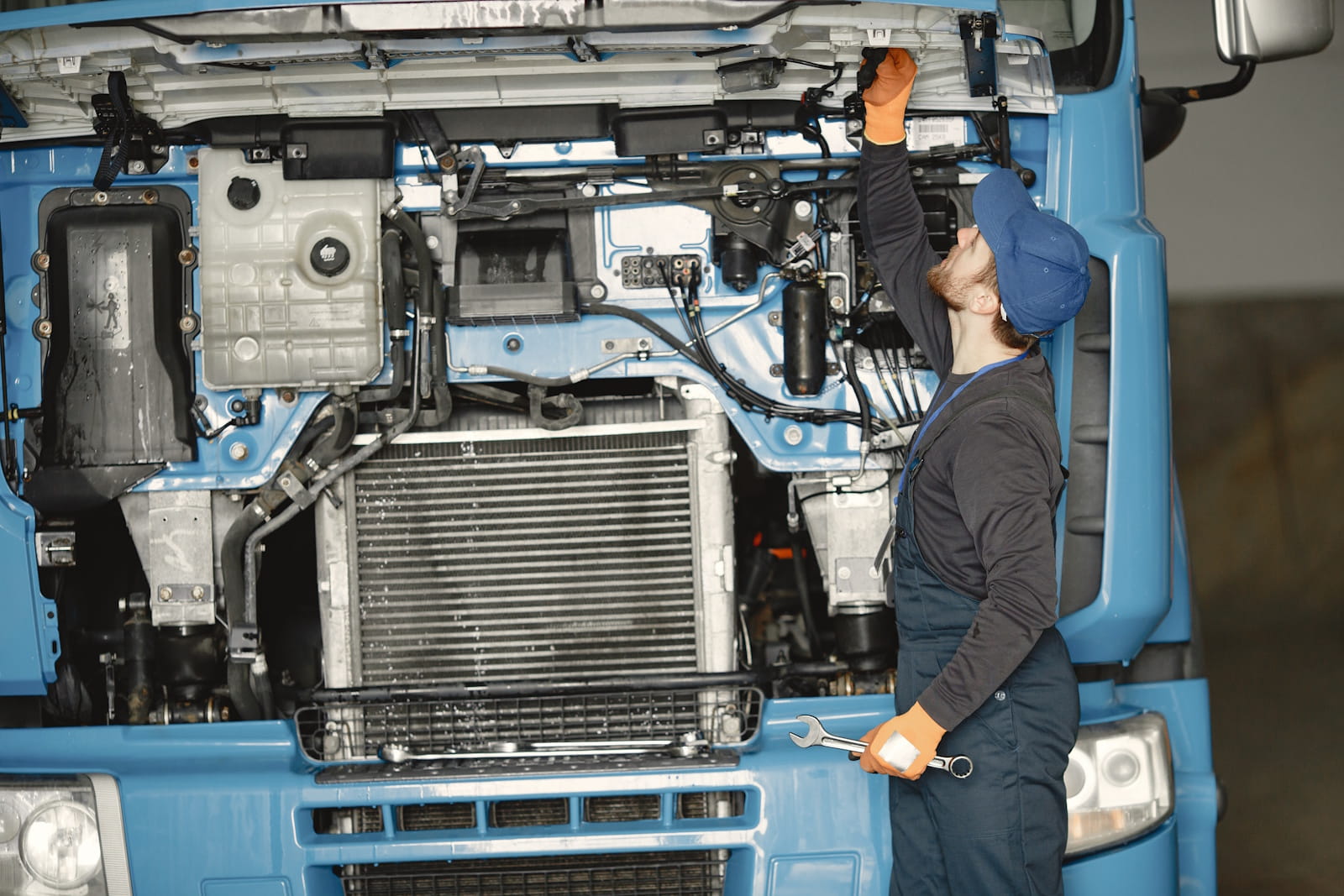
Breaking Down the Cost of Downtime in Commercial Vehicle Fleets
Downtime is one of the most expensive operational risks facing commercial vehicle fleets. When a truck, van or tail lift stops working, the financial impact extends far beyond the original mechanical fault. The business may lose delivery revenue, pay emergency repair charges and absorb the cost of drivers, dispatchers and customer service teams managing the disruption.
Industry estimates place the average cost of vehicle downtime at approximately $448 to $760 per vehicle per day (approximately R8,300 to R14,100), although the actual figure depends on the vehicle, cargo, route and delivery contract. For South African fleets, towing distances, imported parts, labour rates and replacement transport can increase the final amount. Understanding every cost category helps fleet managers invest in maintenance and equipment that protect long-term uptime.
What Does Fleet Downtime Really Cost?
The visible cost of downtime usually appears on a workshop invoice. It may include replacement parts, technician labour and diagnostic work. However, these expenses often represent only a portion of the total loss because they exclude revenue, productivity and customer-service consequences.
A vehicle may generate no income while it is being repaired, yet many of its operating costs continue. Finance payments, insurance premiums, licence fees, salaries and depot expenses remain payable. The longer the vehicle stays out of service, the more these fixed costs affect profitability.
A realistic calculation should therefore combine repair costs with lost revenue, towing, overtime, replacement capacity and administrative time. If a vehicle normally generates R8,000 in revenue per day and remains idle for three days, lost revenue alone may reach R24,000 before any repair expenses are added.
Direct Downtime Costs in Commercial Vehicle Fleets
Direct costs are the expenses that can be connected immediately to a breakdown. They are normally easier to identify because they appear on invoices, service records and fleet expense reports. However, urgent repairs frequently cost more than the same work completed during scheduled maintenance.
After-hours labour, roadside call-outs and emergency parts deliveries can increase the total repair amount. If a component is not locally available, the business may also pay express freight charges while the vehicle remains idle. These costs can become especially high for specialist commercial equipment.
Typical direct downtime costs include:
- Replacement components and consumable parts
- Technician labour and diagnostic charges
- Roadside call-out fees
- Towing and vehicle-recovery expenses
- Workshop storage fees
- Emergency freight for unavailable parts
- Rental vehicles or outsourced transport
- Driver accommodation and travel costs
- Overtime for workshop and operations staff
Replacement transport does not eliminate the cost of downtime. A rented vehicle may allow deliveries to continue, but the fleet still pays the rental fee, fuel, insurance and possible mileage charges. Outsourcing work can also reduce the profit earned from each delivery.
Fleet managers should record these costs against the individual vehicle and breakdown event. This creates a more accurate maintenance history and makes it easier to compare the cost of continuing to repair an unreliable vehicle with the cost of replacing or upgrading it.
Lost Revenue and Missed Deliveries
A commercial vehicle usually earns revenue by completing routes, deliveries or service visits. When it becomes unavailable, that income may stop immediately. Even a delay of several hours can result in missed delivery windows, rejected loads or contractual penalties.
The financial effect becomes more serious when the vehicle carries high-value or time-sensitive cargo. A delayed delivery may prevent a customer from completing production, restocking a store or meeting its own service commitments. In these situations, the fleet may face claims that exceed the value of the transport job.
Repeated delays can also weaken future revenue. Customers may tolerate an isolated breakdown, but ongoing unreliability can affect contract renewals and referrals. The loss of one long-term customer may cost significantly more than the repairs that caused the original service failures.
The Operational Ripple Effect of a Breakdown
One failed vehicle can disrupt several parts of an operation. Dispatchers may need to reassign loads, change routes and contact customers. Workshop teams may abandon planned tasks to handle the emergency, while managers spend time approving repairs and replacement arrangements.
The remaining fleet may also carry additional pressure. Other vehicles may need to travel further, complete extra stops or carry heavier loads within their legal limits. This increases fuel consumption, mileage and wear across vehicles that were not involved in the initial breakdown.
The wider disruption may include:
- Emergency route changes
- Delayed or cancelled deliveries
- Additional mileage for working vehicles
- Increased fuel consumption
- Rescheduled driver shifts
- Interrupted workshop plans
- Postponed preventative maintenance
- Additional calls to customers and suppliers
- Greater administrative workload
- Increased wear on replacement vehicles
The interruption of planned maintenance is particularly risky. When technicians postpone scheduled work to handle a breakdown, another vehicle may continue operating with an undetected defect. This can create a cycle in which one emergency contributes to the next.
Fleet capacity should therefore include a reasonable allowance for unplanned disruption. Accurate route data, maintenance records and contingency procedures allow teams to respond faster without placing excessive strain on the rest of the operation.
Driver Costs, Overtime and Lost Productivity
Drivers may remain on duty while waiting for roadside support, towing or replacement vehicles. The business continues paying for this time even though no productive work is being completed. A breakdown can therefore turn several paid hours into a direct labour loss.
Additional drivers may then need to work longer shifts or complete extra stops. This increases overtime expenses and may affect legally permitted working hours. Fatigued drivers can also face greater safety risks, particularly when emergency route changes extend an already demanding day.
Driver-related costs may include:
- Paid waiting time
- Overtime for replacement drivers
- Additional meal or travel allowances
- Accommodation after long-distance breakdowns
- Transport back to the depot
- Lost delivery productivity
- Rescheduled leave or rest periods
- Increased recruitment and retention pressure
- Additional supervision and administration
Equipment reliability also affects morale. Drivers who frequently experience vehicle or loading-equipment failures may feel that the business does not provide the tools needed to work safely and efficiently. This frustration can contribute to disengagement and staff turnover.
Fleet managers should include driver feedback in maintenance planning. Operators often notice slow movement, unusual sounds or changing vehicle behaviour before a complete failure occurs. A clear reporting process can turn these observations into early maintenance action.
Cargo Losses and Product Damage
Downtime can cause substantial losses for commercial vehicle fleets when vehicles carry perishable, fragile or temperature-sensitive goods. Refrigerated products may spoil if the cooling system fails or the vehicle remains stationary for too long. The fleet may then lose the cargo value as well as the delivery revenue.
Emergency transfers create another risk. Goods may need to be unloaded at the roadside or moved quickly into a replacement vehicle. Each additional handling stage increases the possibility of breakage, contamination, incorrect stacking or misplaced stock.
The effect may continue after the delivery. Customers could reject damaged goods, request replacements or claim compensation for lost sales. Fleet downtime calculations should therefore include written-off cargo, replacement deliveries and the labour required to investigate and resolve each claim.
Safety and Compliance Risks
Mechanical failures are not only financial problems. They can place drivers, operators, cargo and other road users at risk. South African road-safety information has associated approximately 14.1% of road accidents with vehicle mechanical factors, while tyre bursts accounted for about 2.4% of fatal crashes in one reported period.
Tail lifts and other loading systems introduce additional workplace risks. Hydraulic leaks, damaged platforms, unstable movement and faulty controls can lead to dropped loads, falls or crushing injuries. A vehicle may remain capable of driving while still being unsafe for loading and unloading.
Poor maintenance records may also create legal and insurance difficulties after an incident. A business that cannot demonstrate regular inspections and timely repairs may struggle to prove that reasonable precautions were taken. Accurate service records therefore support both operational control and compliance.
How Tail Lifts Help Commercial Vehicle Fleets Reduce Downtime
Tail lifts allow drivers to load and unload goods where forklifts, loading docks or additional labour are unavailable. This flexibility helps commercial vehicle fleets complete deliveries at warehouses, shops, construction sites and customer premises with limited infrastructure.
A suitable tail lift can also reduce loading time. Faster handling at each stop allows drivers to complete more deliveries without extending working hours. It also reduces dependence on manual lifting, helping to lower the risk of back strain and other handling injuries.
These benefits depend on reliability. A failed tail lift can make an otherwise roadworthy vehicle unable to complete its route. The cost of maintaining the lift should therefore be considered part of the cost of keeping the complete vehicle operational.
How the Right Tail-Lift Setup Supports Fleet Uptime
A tail lift must match the vehicle, cargo and working environment. Selecting equipment based only on maximum lifting capacity can lead to poor performance if platform dimensions, load centre, ground clearance and cycle frequency are ignored.
A correctly specified system distributes loads safely and avoids unnecessary strain on hydraulic and structural components. It also preserves vehicle payload and provides suitable access for the goods being transported. These factors support reliable daily operation and longer equipment life.
Fleet buyers should consider:
- The maximum regular load
- The load centre and weight distribution
- Platform length and width
- Vehicle payload and axle limits
- The number of daily lifting cycles
- Rear or side-door access requirements
- Ground clearance
- Dock and ground-level loading needs
- Cargo stability and handling method
- Route and yard conditions
- Corrosion exposure
- Local parts and technical support
Equipment design can further support uptime. Accessible hydraulic components, protected piston rods, low-maintenance bearings and corrosion-resistant finishes make inspection and servicing easier. Vehicle-specific mounting systems can also reduce fitment time and simplify later maintenance.
Operators must still use the equipment correctly. Overloading, poor weight distribution and uncontrolled platform movement can damage even a well-specified lift. Practical training should therefore form part of every installation and handover.
Preventative Maintenance Reduces Downtime
Preventative maintenance identifies wear before it causes a complete failure. A scheduled inspection may reveal leaking seals, damaged wiring, worn pins or loose fittings while the vehicle is still operational. These defects are usually faster and less expensive to correct at an early stage.
Reactive repairs often cost more because the failure occurs at an inconvenient time or location. The business may need roadside assistance, towing and emergency labour. Planned work can instead be completed when technicians, parts and replacement capacity are available.
A preventative maintenance programme should include:
- Regular hydraulic-fluid checks
- Inspection for leaks
- Lubrication of moving components
- Examination of pins, bushes and bearings
- Structural and platform inspections
- Wiring and control checks
- Testing of warning systems
- Inspection of safety valves
- Verification of emergency controls
- Replacement of worn components
- Accurate service records
Service intervals should reflect actual usage. A lift completing dozens of cycles each day experiences more wear than one used only a few times per week. Maintenance plans should therefore consider cycle frequency, load weight, road conditions and environmental exposure.
Preventative work should also be coordinated with vehicle servicing where possible. Combining inspections can reduce workshop visits and total downtime. It allows technicians to assess the vehicle and loading equipment as one connected operational asset.
Daily Checks That Protect Fleet Uptime
Daily inspections help identify small defects before commercial vehicle fleets begin their routes. Operators should examine the platform, hydraulic system, controls, visible wiring and warning devices. Slow movement, uneven lifting, unusual sounds or fluid leaks should be reported immediately.
These checks do not need to take long. A structured five-minute inspection completed before the first delivery can prevent hours or days of disruption later. The process should be simple enough for drivers to follow consistently and detailed enough to identify meaningful risks.
Inspection results should be recorded rather than communicated only through informal conversation. Digital or paper checklists allow maintenance teams to identify repeated faults, confirm that defects were resolved and measure which vehicles or lift models experience the most problems.
The Role of Predictive Maintenance
Predictive maintenance uses equipment condition and performance trends to determine when intervention is required. It focuses on signs of developing failure rather than waiting for a fixed service date or a complete breakdown.
For a hydraulic tail lift, relevant indicators may include slower platform movement, repeated fluid loss, unusual noise and inconsistent lifting. Tracking these signs over time helps maintenance teams plan repairs before the equipment becomes unusable.
Predictive methods work best when combined with daily inspections and preventative servicing. They do not remove the need for routine care. Instead, they help fleets direct attention towards equipment showing the highest risk of failure.
Choosing Equipment With Uptime in Mind
The purchase price is only one part of the equipment cost. A cheaper tail lift may become expensive if it requires frequent repairs, lacks local parts or takes longer to service. Fleet buyers should compare total lifecycle cost rather than focusing only on the initial quotation.
The wider Dhollandia product range covers capacities from approximately 150 kg to 16,000 kg, showing how widely lifting requirements can differ. Passenger vehicles, vans, delivery trucks and heavy commercial units each need equipment designed for their specific loads and body configurations.
Buyers should also assess warranty support, installer expertise and maintenance accessibility. Equipment that can be fitted correctly, inspected easily and repaired with locally available parts is more likely to support dependable fleet performance.
Why Parts and Technical Support Matter
A technician cannot complete a repair without the correct component. A simple failure can keep a vehicle in commercial vehicle fleets idle for several days if a seal, control or hydraulic part must be sourced from far away.
Technical knowledge is equally important. Accurate diagnosis prevents unnecessary component replacement and repeat workshop visits. Experienced technicians can also identify whether the immediate fault resulted from incorrect installation, misuse or another developing problem.
Fleet records improve the support process. Serial numbers, vehicle registrations, service histories and clear descriptions of the fault allow technicians to prepare suitable parts before attending. This increases the possibility of returning the vehicle to service during the first visit.
How Dhollandia SA Supports Fleet Uptime
At Dhollandia SA, we support customers throughout the equipment lifecycle. Our services include tail-lift selection, vehicle-specific installation, maintenance, repairs, warranty assistance and emergency breakdown support.
We operate from Johannesburg, Cape Town, Durban and Port Elizabeth. This presence allows us to support customers across major South African transport regions while helping fleets reduce unnecessary delays when technical assistance is required.
Our support includes:
- Vehicle and application assessment
- Tail-lift selection
- Vehicle-specific installation
- Passenger and van lifts by special order
- Cantilever, slider, fold-away and column lifts
- Routine servicing and maintenance
- Fault diagnosis and repairs
- Warranty assistance
- Access to technical expertise
- A 24-hour national breakdown service
- Support for certain other tail-lift brands
- Pommier vehicle-body equipment and accessories
We supply equipment for a wide range of applications, from passenger access and light commercial vehicles to demanding truck operations. Our team considers platform dimensions, load requirements, vehicle configuration and daily working conditions before recommending a solution.
We also work with tail lifts designed to simplify maintenance. Depending on the model, features may include corrosion-resistant finishes, accessible hydraulic systems, low-maintenance bearings and bolt-on mounting arrangements. These details help shorten installation and servicing time.
Tail-Lift Installation and Maintenance Expertise
Correct installation protects the vehicle, lift and operator. We assess the vehicle before fitment to make sure the mounting arrangement, controls and platform suit the intended application. This reduces the likelihood of preventable compatibility problems.
Our aim is to help customers keep their vehicles productive over the long term. Responsive repairs, appropriate maintenance and access to replacement parts can reduce the time between reporting a fault and returning the vehicle to service.
Building a Practical Downtime Strategy
A practical strategy begins with measurement. Fleet managers should record breakdown frequency, repair duration, labour costs, towing, replacement vehicles, overtime and missed deliveries. Without this information, the true cost of an unreliable asset remains hidden.
The data should then be used to identify patterns. One vehicle may repeatedly experience electrical faults, while another may lose productive time because specialised parts are difficult to source. These patterns can guide maintenance changes, equipment upgrades and replacement decisions.
Each significant breakdown should also receive a basic operational review. The fleet should establish what failed, why it failed, how long the response took and what could prevent a repeat event. This turns every incident into an opportunity to improve future uptime.
Protect Your Uptime
Downtime in commercial vehicle fleets costs far more than the repair invoice. Lost revenue, towing, replacement capacity, overtime, cargo damage and customer dissatisfaction can quickly multiply the financial impact of a single mechanical failure. Tail-lift problems are especially disruptive because they may stop a roadworthy vehicle from completing deliveries.
At Dhollandia SA, we help commercial vehicle fleets protect uptime through suitable equipment selection, professional installation, planned maintenance and responsive breakdown support. Get in touch with our team to discuss a tail-lift solution or service plan that can help keep vehicles working, deliveries moving and downtime under control.
FAQs
Fleet downtime can cost hundreds of dollars per vehicle each day, but the total varies by vehicle type, cargo, route and repair complexity. Direct expenses include labour, parts, towing and call-out fees. Hidden costs may include lost revenue, rental vehicles, driver overtime, delayed deliveries and administrative work. A realistic calculation should also include fixed costs such as finance payments, insurance and salaries that continue while the vehicle is idle. Fleet managers should record every expense linked to each breakdown so they can compare repair costs, identify unreliable assets and make better replacement and maintenance decisions over time with greater accuracy.
The biggest hidden costs often come from lost productivity and operational disruption rather than the repair itself. Dispatchers may need to reroute vehicles, contact customers and reorganise driver schedules. Other vehicles may complete extra stops, increasing fuel use, mileage and wear. Drivers may spend paid hours waiting for assistance, while customers experience delays or missed deliveries. Cargo may also be damaged during emergency transfers. Repeated breakdowns can weaken customer trust and affect contract renewals. These costs are harder to see on a workshop invoice, but they can exceed the original mechanical repair expense by a significant margin over the longer term.
Commercial vehicle fleets can reduce downtime through regular inspections, preventative maintenance and accurate service records. Drivers should report leaks, unusual noises, slow movement and other warning signs before they become major failures. Maintenance intervals should reflect vehicle usage, daily lifting cycles, road conditions and operating environments. Fleets should also choose equipment with accessible components, local parts support and suitable warranty cover. Recording breakdown frequency, repair duration and associated costs helps managers identify recurring problems. A clear response plan, reliable technical support and properly trained operators can shorten repair delays and prevent avoidable equipment damage during daily work across the entire fleet.
A commercial vehicle may remain roadworthy but still be unable to complete deliveries when its tail lift fails. Many delivery points do not have loading docks, forklifts or enough staff to unload heavy cargo manually. A failed platform, hydraulic leak or control fault may therefore force the driver to return goods, wait for assistance or arrange another vehicle. This creates lost revenue, overtime and customer delays. Correct tail-lift selection, professional installation and routine maintenance reduce this risk. Fleets should inspect platforms, controls, hydraulic systems and safety features daily, while reporting unusual movement or fluid loss immediately to maintenance teams promptly.