
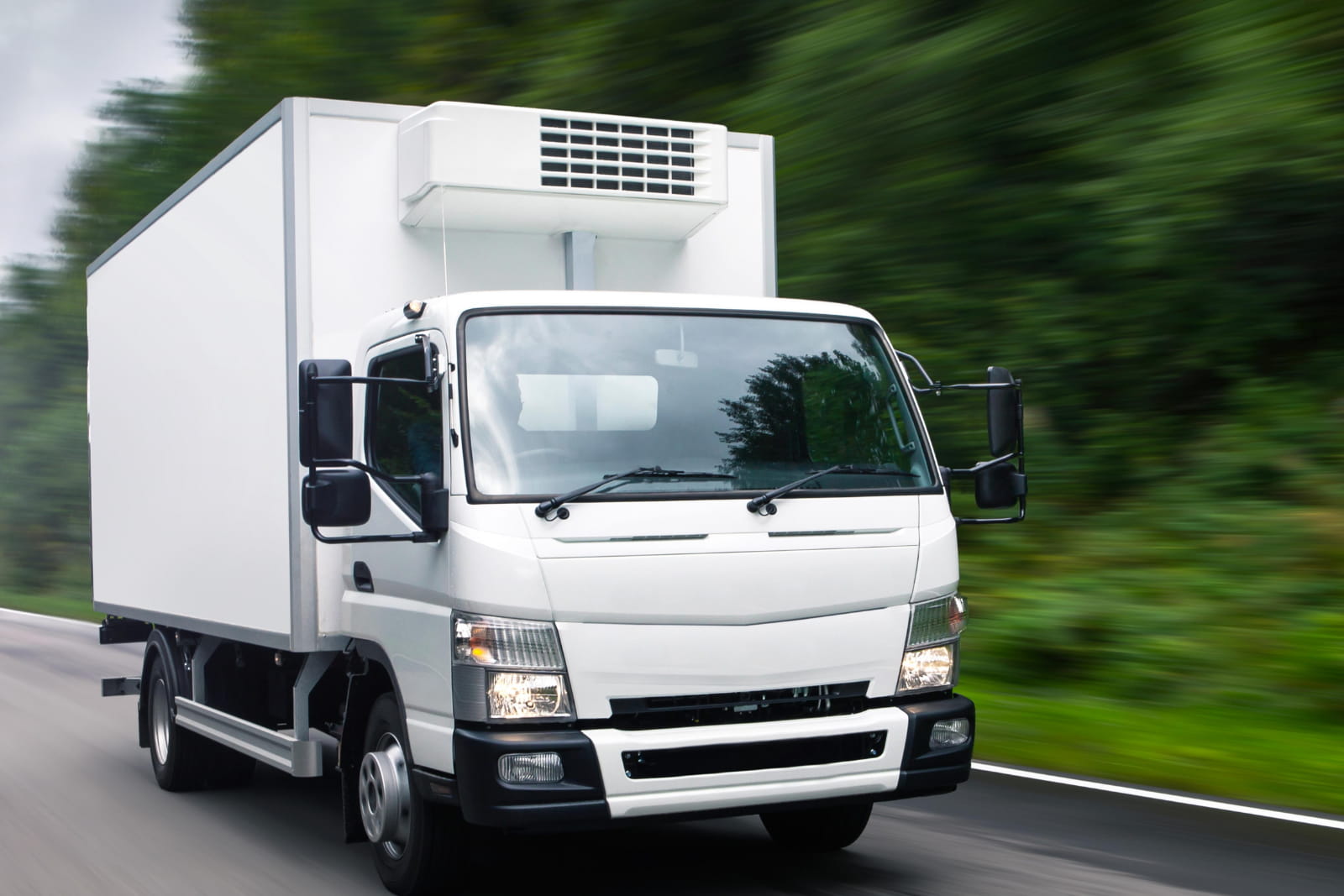
The Benefits of Tail Lifts for Refrigerated Trucks
Refrigerated transport relies on far more than a powerful cooling unit. Everything from insulation and loading practices to temperature monitoring and tail lifts can affect how safely and efficiently chilled or frozen goods reach their destination. This matters for food, beverages, pharmaceuticals and other products where delays or poor handling can affect product quality.
The scale of the cold-chain challenge shows why every part of the vehicle matters. Research published by the United Nations Environment Programme and the Food and Agriculture Organization found that a lack of effective refrigeration contributes to the loss of around 526 million tonnes of food each year, equal to roughly 12% of global food production. Efficient refrigerated transport therefore has an important role to play in reducing waste and protecting valuable goods.
Why Tail Lifts Matter for Refrigerated Trucks
A refrigerated truck is designed primarily to maintain the temperature of goods that are already cold, rather than quickly cooling products that were loaded too warm. This means every stage of loading and unloading needs to protect the controlled environment inside the cargo body.
Tail lifts give drivers and operators a practical way to move pallets, roll cages and other heavy goods between the cargo floor and ground level. Instead of depending on a loading dock or forklift at every stop, the vehicle can handle deliveries more independently.
Key benefits include:
- Faster and more organised loading and unloading
- Less reliance on loading docks and forklifts
- Reduced manual handling of heavy goods
- Better access at shops, restaurants and other ground-level delivery points
- Shorter periods with refrigerated doors open
- Greater flexibility during multi-stop delivery routes
- Safer handling of pallets, roll cages and bulky cargo
This flexibility is especially useful for food and FMCG fleets that may start a route at a large distribution centre but make deliveries to several smaller locations. A suitable lift allows the same refrigerated vehicle to work effectively in both environments.
The benefits also extend to workplace safety. In Great Britain, 680,000 workers reported sustaining a non-fatal workplace injury in 2024/25, while handling, lifting or carrying accounted for 17% of employer-reported non-fatal injuries. Mechanical lifting does not remove every risk, but reducing unnecessary manual handling can form an important part of safer working practices.
How Tail Lifts Help Protect the Cold Chain
Temperature control should continue throughout the delivery journey, including the few minutes when products are being unloaded. Opening the rear doors allows warmer outside air to enter and cooled air to escape, making quick and organised cargo handling particularly valuable on multi-drop routes.
The consequences of weak cold-chain infrastructure can be significant. Around 12% of total global food production was lost because of insufficient refrigeration in 2017, according to international cold-chain research. The same research estimates that food cold chains account for about 4% of global greenhouse gas emissions when refrigeration technologies and losses caused by insufficient refrigeration are considered together.
Practical ways tail lifts can support cold-chain performance include:
- Speeding up pallet and roll-cage movement
- Reducing avoidable delays during unloading
- Helping drivers prepare loads for efficient multi-stop deliveries
- Allowing unloading where no loading dock is available
- Supporting controlled handling of temperature-sensitive products
- Reducing the time cargo doors may need to stay open
- Working alongside temperature monitoring and good loading procedures
Cold-chain control becomes even more important for certain pharmaceutical products. World Health Organization guidance states that vaccines supplied through its established immunisation programmes generally require storage and transport below 8°C, except where specifically approved controlled-temperature arrangements apply. This illustrates how small temperature limits can matter when sensitive goods are transported.
Tail lifts cannot replace good refrigeration, insulation or temperature monitoring, but they can help make the physical handling process more efficient. In practice, the strongest refrigerated operation is one where the truck body, cooling system, driver procedures and loading equipment work together rather than being treated as separate elements.
Tail Lifts Make Loading and Unloading Safer
Moving heavy pallets manually between the ground and a truck bed creates obvious handling challenges. A tail lift provides a controlled platform that raises cargo to the height of the vehicle floor, reducing the need for workers to lift or lower heavy goods through large vertical distances.
The workplace figures show why this deserves attention. Handling, lifting and carrying caused 17% of employer-reported non-fatal workplace injuries in Great Britain during 2024/25. Slips, trips and same-level falls accounted for another 30%, making stable working surfaces and sensible loading procedures important around commercial vehicles.
Safety still depends on correct operation. Load limits should never be exceeded, cargo needs to remain stable on the platform, and non-slip surfaces, safety controls and maintenance checks need proper attention. Operators should also be trained to position loads correctly and keep people clear of moving equipment.
How Tail Lifts Can Improve Delivery Efficiency
A refrigerated vehicle may spend its day travelling between very different delivery environments. A large warehouse might offer a raised dock and forklift support, while the next stop could be a restaurant, convenience store or small retailer where everything needs to be unloaded at street level.
Tail lifts give fleets more independence in these situations. Rather than waiting for site equipment, the driver can lower pallets or roll cages directly to ground level. The value becomes greater as the number of stops increases because even small improvements in unloading time can add up across an entire route.
Cold-chain projects also demonstrate the wider value of efficient refrigerated logistics. One project reported by the United Nations reduced kiwi-fruit losses by 76% after refrigerated transport was expanded. Tail lifts were not solely responsible for that result, but the figure highlights how improvements throughout the refrigerated supply chain can translate into meaningful reductions in product loss.
Choosing the Right Type of Tail Lift
No single tail lift suits every refrigerated truck. Vehicle size, chassis layout, cargo type, loading frequency and the places where deliveries happen should all influence the decision. A fleet making mostly street-level deliveries may have very different needs from one regularly reversing onto loading docks.
Capacity also varies considerably. Commercial tail lifts can range from relatively light lifting applications to equipment capable of handling several tonnes. Within Dhollandia SA’s broader product offering, capacities extend from around 150 kg to 16,000 kg, showing just how different lifting requirements can be across commercial transport applications.
For refrigerated fleets, rear access deserves particular attention. If a vehicle regularly uses docks or forklifts, a system that stores underneath the chassis may provide more flexibility. If ground-level lifting is the main priority, a permanently available platform may be more practical.
Cantilever Tail Lifts
Cantilever tail lifts remain permanently available at the rear of the vehicle. They provide a substantial platform and controlled movement between the truck floor and ground, making them useful where frequent ground-level deliveries are part of normal operations.
Capacity gives an idea of their potential applications. Dhollandia SA’s cantilever options extend from around 500 kg to 3,000 kg, allowing the configuration to serve anything from lighter commercial work to demanding freight applications.
The main consideration for a refrigerated operator is rear access. Because the platform remains at the back, fleets that frequently use loading docks need to make sure the configuration works with their normal loading routine. Where direct ground-level handling dominates, its simplicity and availability can be a strong advantage.
Slider Tail Lifts
Slider lifts retract underneath the vehicle when they are not needed. This leaves the rear cargo area accessible, making them useful for trucks that alternate between loading docks, forklift loading and deliveries where their own lifting equipment is required.
Heavy-duty capacity is another advantage. The main slider models highlighted by Dhollandia SA cover lifting capacities of up to 3,000 kg, supporting applications involving substantial pallets and commercial loads.
For refrigerated fleets, that combination of lifting ability and clear rear access can be valuable. However, sufficient chassis space and ground clearance are essential. A slider should therefore be selected as part of the overall vehicle specification rather than added without considering the truck’s dimensions and operating conditions.
Fold-Away Tail Lifts
Fold-away tail lifts use a platform that folds and stores beneath the chassis. This keeps the rear of the truck clear when the equipment is not in use and can suit fleets that regularly switch between dock loading and customer deliveries at ground level.
The available capacities also cover common commercial loads. Dhollandia SA’s listed fold-away models range from approximately 750 kg to 2,000 kg, depending on the configuration. Certain models also offer specific mounting options for refrigerated truck bodies.
This makes fold-away designs particularly relevant to food, FMCG and cold-chain distribution. The additional hinges and moving components should still receive proper inspection and lubrication, particularly where equipment is exposed to condensation, road dirt, cold conditions and regular vehicle washing.
Column Tail Lifts
Column lifts move the platform vertically along columns installed at the rear of the vehicle. Their large platforms and guided vertical movement make them suitable for bulky or heavy goods, particularly where a stable lifting surface is a priority.
Dhollandia SA’s column-lift range covers loads from approximately 750 kg to 3,000 kg. This gives refrigerated fleet operators considerable flexibility when specifying equipment for pallets, roll cages or other substantial cargo.
The main trade-off is that the columns remain around the rear opening. Operators should therefore consider how this affects access to docks and loading equipment. Where heavy vertical lifting is more important than completely unobstructed rear access, a column configuration can be a practical option.
What to Consider When Choosing Tail Lifts for Refrigerated Trucks
Choosing correctly starts with the load itself. The lift should be rated for the heaviest realistic single load it will handle, not simply the average. Platform dimensions also need to accommodate the actual pallets, cages and containers used during daily operations.
Vehicle compatibility is equally important. Refrigerated bodies contain substantial insulation, while chassis space, rear overhang, ground clearance and axle loading may restrict which lift designs can be fitted safely and practically.
Important points to check include:
- Maximum load and load-centre requirements
- Platform length and width
- Truck chassis compatibility
- Ground clearance
- Refrigerated-body construction
- Frequency of daily lifting cycles
- Exposure to condensation, water and road grime
- Corrosion-resistant finishes and components
- Access to loading docks and forklifts
- Ease of routine servicing
- Availability of replacement parts
- Operator and platform safety features
Capacity differences alone show why proper specification matters. Depending on the type, Dhollandia SA lists commercial configurations ranging from 750 kg on certain fold-away models to 3,000 kg on cantilever, slider and column options. Choosing capacity without also considering load position, vehicle structure and intended use can result in the wrong solution.
The refrigerated environment also requires attention to durability. Condensation, humidity and regular cleaning can be hard on exposed mechanical and electrical parts. Corrosion protection, suitable materials and accessible maintenance points therefore contribute to whole-life reliability.
Finally, think beyond purchase price. A cheaper lift that causes access problems, carries insufficient loads or regularly requires repairs may cost more over its service life. Specification should balance purchase cost with durability, productivity, maintenance and potential vehicle downtime.
How Tail Lifts Can Reduce Vehicle Downtime
A refrigerated truck that cannot unload is only partly operational. Even if the refrigeration and engine are working properly, a failed lift can prevent delivery at sites without docks or suitable handling equipment. For temperature-sensitive cargo, delays can quickly become costly.
The scale of global cold-chain losses reinforces the importance of reliability. Insufficient refrigeration is associated with roughly 526 million tonnes of food loss annually, so avoiding preventable disruptions throughout storage and transport remains an important operational priority.
Preventative maintenance should therefore cover hydraulic components, lubrication points, platforms, electrical systems and safety controls. Fleets should also consider access to technical support and replacement parts before buying. A reliable lift supported by planned servicing is far easier to manage than unexpected failure during a delivery route.
Tail Lifts Can Support Better Whole-Life Value
Purchase price tells only part of the story. Tail lifts operate repeatedly in difficult environments, so servicing costs, durability, downtime and suitability for the vehicle should form part of the buying decision from the beginning.
The wider cold chain faces a similar challenge. Food cold-chain activity is estimated to account for around 4% of global greenhouse gas emissions, including emissions from cooling technologies and food losses caused by inadequate refrigeration. Efficient equipment and well-planned operations therefore have both economic and environmental importance.
Whole-life value comes from choosing a lift that fits the actual job. A fleet should consider how often it will operate, what it will carry, where vehicles unload and how easily the equipment can be maintained. Paying for suitable capacity and durability from the outset can help avoid unnecessary modification, repair and downtime later.
Who Sells Tail Lifts Compatible With Refrigerated Trucks?
At Dhollandia SA, we supply tail lifts for refrigerated trucks and a wide range of other commercial vehicle applications. We understand that cold-chain fleets need equipment that supports safe cargo handling while fitting the loading pattern, vehicle body and delivery environment.
We offer cantilever, slider, fold-away and column configurations, with a wider product range covering capacities from around 150 kg to 16,000 kg. Certain fold-away models have mounting options specifically designed for refrigerated bodies, making them particularly useful where clear rear access and flexible loading are required.
Our support includes:
- Tail lift supply and professional installation
- Cantilever, slider, fold-away and column options
- Solutions compatible with refrigerated truck bodies
- Maintenance and servicing
- Repairs
- Warranty assistance
- Support for selected other tail lift brands
- 24-hour national breakdown support
- Local operations in Johannesburg, Durban, Cape Town and Port Elizabeth
We were established in 2018 as the authorised Dhollandia dealer in South Africa and have developed a service presence across four major South African cities. This gives customers access to both specialised lifting equipment and local technical support.
We also recognise that support does not stop after installation. Our 24-hour national breakdown service, maintenance, repair and warranty assistance are designed to help fleets minimise disruption when equipment needs attention.
For refrigerated operators, our goal is to help match the lift to the vehicle rather than simply sell a standard product. Load requirements, dock access, route conditions, chassis design and refrigerated-body configuration should all be considered when selecting the right solution.
A Practical Contribution to Deliveries
For refrigerated transport, tail lifts can contribute to safer handling, more efficient deliveries and better cold-chain control. They allow pallets and roll cages to move between truck and ground without relying on loading infrastructure at every destination, while quicker handling can help minimise unnecessary periods with refrigerated doors open.
At Dhollandia SA, we can help identify a tail lift that suits the vehicle, cargo and way the fleet actually works, while providing installation and ongoing support after the purchase. Get in touch with us to discuss your refrigerated truck requirements and find the right tail lifts for your operation.