
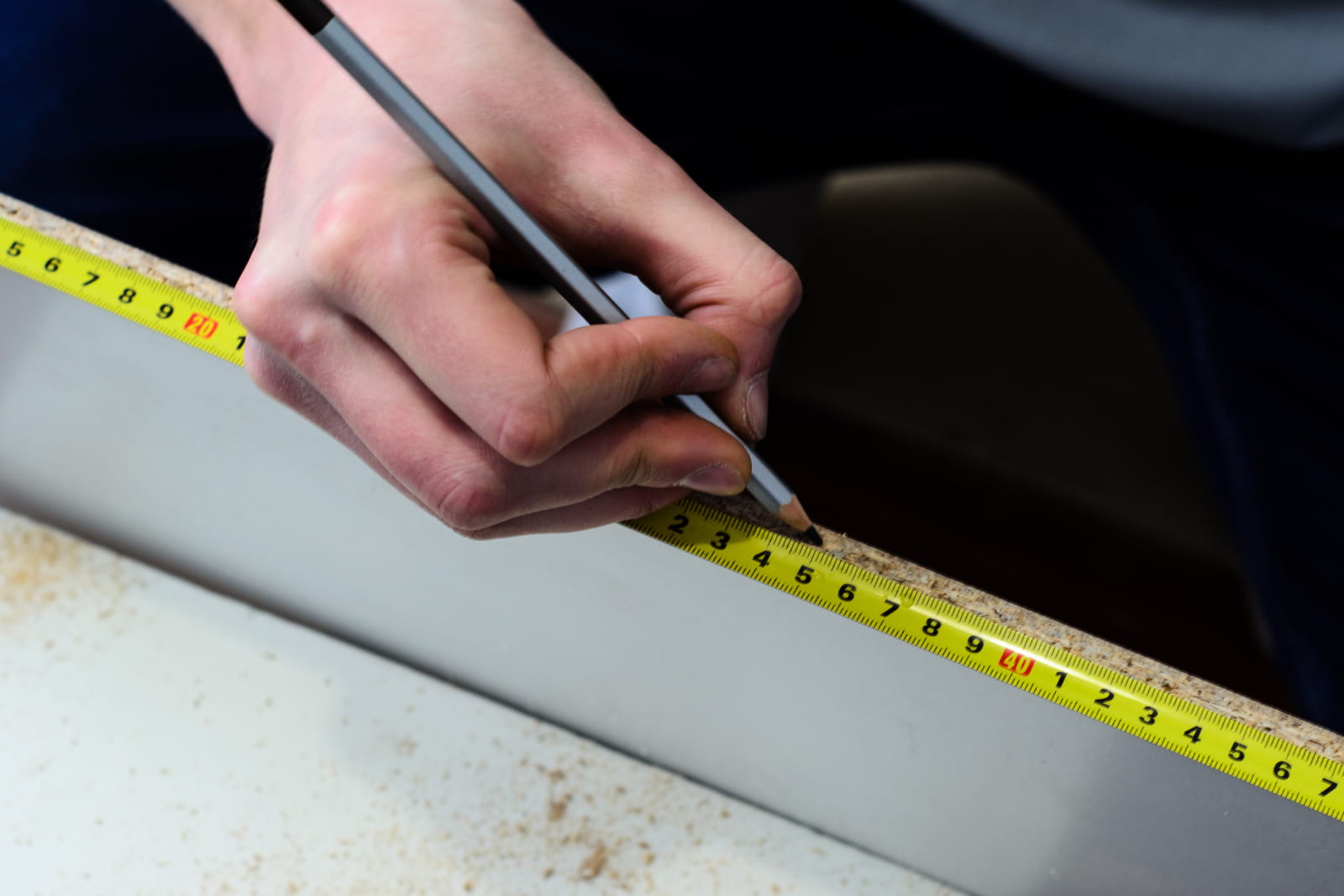
Tail Lift Dimensions: What Fleets Should Measure
Choosing a tail lift involves more than checking how many kilograms it can raise. Tail lift dimensions affect vehicle compatibility, usable payload, loading efficiency, cargo stability and how easily drivers can work at delivery sites. A platform that is too small may make pallet handling awkward, while an unnecessarily large lift can add weight and reduce the payload available for cargo.
Fleet managers should therefore measure the vehicle and understand the cargo before selecting equipment. Platform width and depth, load centre, mounting space, loading height, ground clearance and lift weight all need to work together. Accurate measurements made before installation can help prevent compatibility problems and make the completed vehicle more practical for daily fleet operations.
Why Tail Lift Dimensions Matter
Tail lifts are available in very different sizes because commercial vehicles perform very different jobs. A vehicle carrying roll cages around urban delivery routes has different requirements from a truck transporting heavy machinery or agricultural equipment. Dhollandia’s wider product range spans lifting capacities from approximately 150 kg to 16,000 kg, showing just how widely commercial lifting requirements can vary.
Dimensions also affect how safely and efficiently a platform can be used. A lift may technically support the weight of a pallet but still provide too little working space for the operator, pallet truck or roll cage. Fleet managers therefore need to think about the complete loading process rather than capacity alone.
Key dimensions and measurements to assess include:
- Platform width
- Platform depth
- Vehicle loading height
- Load centre
- Cargo dimensions
- Tail lift dead weight
- Chassis and mounting space
- Ground clearance
- Rear-access requirements
The relationship between these measurements matters just as much as the individual figures. A large platform can provide more working space, for example, but it will normally add weight to the installation. Additional equipment weight can reduce the vehicle’s remaining cargo capacity and affect how efficiently the vehicle is used.
Fleet managers should therefore aim for the best operational fit rather than simply specifying the largest available lift. Measuring actual cargo, routes and loading conditions helps ensure tail lift dimensions support productivity without adding unnecessary weight or complexity.
Measure the Vehicle’s Loading Height
One of the first figures to record is the vertical distance between the ground and the vehicle’s cargo floor. The lift needs to move comfortably across this height while keeping the platform stable and usable. Loading heights differ significantly between vans, rigid trucks, trailers and specialist vehicles, so fleet managers should not rely on generic assumptions.
Real operating conditions can also change this measurement. Vehicle suspension may compress when the truck is fully loaded, while uneven yards or roadside delivery areas can alter the relationship between the platform and the ground. This means a measurement taken from an empty vehicle on a perfectly flat workshop floor does not always represent daily conditions.
The safest approach is to measure the vehicle under realistic loading conditions and consider the full operating range. This matters particularly when a lift will be used repeatedly throughout a working day. Dhollandia tail lifts cover capacities ranging from approximately 150 kg to 16,000 kg across the broader range, so the lift mechanism and travel should be matched carefully to the specific vehicle rather than selected on capacity alone.
Check Platform Width
Platform width should be based on the goods and equipment that employees handle most often. Pallets, roll cages, trolleys and machinery all need enough lateral space to remain stable during lifting and lowering. The operator may also need space to stand beside or behind the load, which means the cargo width alone may not provide a complete measurement.
Commercial tail lift platforms can become substantial. Some configurations reach approximately 2,400 mm or more in width, demonstrating how different one application can be from another. A platform of this size may be useful for broad or awkward loads, but it may also be heavier than necessary for a fleet handling smaller goods.
Fleet managers should measure their largest regularly transported items, including packaging, handles and wheels. It is useful to compare this with average cargo as well. Selecting platform width around genuine fleet requirements can prevent both under-specification and unnecessary equipment weight.
Measure Platform Depth
Platform depth determines how much usable working area exists between the vehicle body and the platform edge. A load may comfortably fit across the width while still extending too close to the rear edge if the platform is shallow. This can create awkward positioning and make goods harder to control.
Handling equipment must also be included in the calculation. A pallet truck extends beyond the pallet itself, while roll cages and trolleys require room for operators to manoeuvre them. Fleet managers should therefore measure the combined footprint of the load, handling equipment and operator space.
Real-world tail lift platforms vary widely in depth. One heavy-duty configuration referenced in commercial specifications uses a platform approximately 1,500 mm deep, while another reaches about 1,800 mm. A difference of 300 mm can materially change how much working room is available, particularly when large pallets or machinery need to be positioned safely.
Understand the Load Centre
Rated lifting capacity only makes sense when considered alongside the load centre. This is the horizontal distance between the lifting structure and the load’s centre of gravity. As a heavy load moves further away from the vehicle, it creates more leverage against the lift mechanism.
This is why two loads of the same weight may affect the lift differently. A compact 800 kg pallet positioned close to the vehicle can place different forces on the mechanism than an 800 kg item extending towards the platform edge. Fleet managers should therefore understand both cargo weight and cargo shape.
Important load-centre checks include:
- Identify where the centre of gravity normally sits.
- Measure the depth of common pallets and equipment.
- Check the manufacturer’s capacity at the relevant load centre.
- Avoid positioning concentrated loads near the platform edge.
- Include correct load positioning in operator training.
Commercial specifications illustrate the importance of this principle. One configuration may be rated at 1,500 kg at a 600 mm load centre, while another may offer 2,000 kg at a 1,000 mm load centre. These numbers cannot be compared properly without considering both capacity and load position.
Correct positioning should therefore become part of routine operating procedure. Fleet managers should make sure operators understand that the headline capacity does not necessarily apply at every point on the platform.
Allow for Tail Lift Weight and Vehicle Payload
A tail lift adds permanent weight to the vehicle, which reduces the payload remaining for cargo. Depending on capacity, platform material and design, a commercial tail lift can weigh several hundred kilograms. This means equipment weight must be considered when evaluating the financial and operational value of an installation.
Commercial examples demonstrate the scale involved. A 1,500 kg-capacity configuration with a 2,400 mm by 1,500 mm steel platform can weigh about 510 kg. Another 2,000 kg-capacity configuration with a 2,500 mm by 1,800 mm platform can weigh roughly 625 kg. That weight remains on the vehicle whether the lift is being used or not.
Fleet managers therefore need to balance lifting ability against usable payload. Specifying a lift that is far larger than operational needs may reduce the amount of revenue-generating cargo that can be carried on every trip. Aluminium platform options can sometimes help reduce equipment weight where the application allows.
Measure the Available Mounting Space
A tail lift must physically fit around the vehicle’s existing chassis and equipment. Fleet managers should measure the available area behind and beneath the vehicle, including the space occupied by suspension components, exhaust systems, spare wheels and other fitted equipment.
The required space also depends on lift type. Slider lifts need room beneath the vehicle for the platform to retract, while fold-away lifts require enough space for the folded mechanism. Cantilever lifts remain positioned differently, and column lifts use vertical rear-mounted structures rather than relying primarily on under-chassis storage.
The mounting decision therefore needs to be based on real dimensions. Dhollandia SA lists cantilever models from approximately 500 kg to 3,000 kg, slider models from about 1,000 kg to 3,000 kg and fold-away models from roughly 750 kg to 1,500 kg. These ranges illustrate why installers need to match the mechanism to both capacity needs and available vehicle space.
Consider Ground Clearance
Ground clearance is especially important when parts of the lift are stored beneath the chassis. Slider and fold-away systems need enough room for the platform, frame and hydraulic components while still maintaining practical clearance between the equipment and the road.
Workshop measurements alone may not reveal the full risk. Commercial vehicles often operate over ramps, loading bays, potholes, construction sites, farms and uneven yards. Equipment mounted too low can be exposed to impacts or scraping even if it appears safe when the truck is parked on a level floor.
Fleet managers should assess:
- Minimum clearance beneath the installed lift
- Approach and departure angles
- Typical ramp gradients
- Uneven loading-yard surfaces
- Construction or agricultural routes
- Vehicle suspension movement
- Clearance when the vehicle is fully loaded
Vehicles operating primarily at level distribution centres may tolerate a different configuration from those working on rough or unpredictable surfaces. The intended route should therefore influence the lift specification from the beginning.
Sufficient clearance can help protect the tail lift from physical damage and reduce avoidable downtime. It should be assessed alongside lift capacity, platform size and storage position rather than treated as a minor installation detail.
Match Tail Lift Dimensions to the Lift Type
Different tail lift designs use vehicle space in different ways. Fleet managers should therefore select the operating concept before finalising platform dimensions. The right choice depends on cargo, frequency of use, rear-access needs and available mounting space.
Dhollandia SA offers several configurations covering different capacity ranges. This allows fleets to choose equipment according to working conditions rather than forcing one lift style across every vehicle in the fleet.
The main options include:
- Cantilever lifts: approximately 500 kg to 3,000 kg
- Slider lifts: approximately 1,000 kg to 3,000 kg
- Fold-away lifts: approximately 750 kg to 1,500 kg
- Column lifts: approximately 750 kg to 3,000 kg
Cantilever lifts provide versatile rear-mounted lifting for everyday goods handling. Slider lifts can be stored beneath the chassis, making them useful when the vehicle still needs unrestricted rear access when the lift is not deployed.
Fold-away systems can suit vehicles where the lift is only required at certain stops, while column lifts provide vertical movement and can be adapted with ramps, rails and other accessories. Matching the lift design to the operating pattern can make dimensional decisions much easier.
Account for Rear Access Requirements
Rear access can significantly influence lift selection. Some vehicles rely on the tail lift at almost every delivery, while others only need powered unloading at selected locations. A platform that obstructs the rear opening unnecessarily can slow down operations at stops where the lift is not required.
Slider and fold-away lifts are useful examples of designs intended to preserve access. Slider platforms retract beneath the vehicle, while fold-away systems can be stowed out of the primary loading area. This can help drivers switch between conventional loading and assisted unloading more easily.
Fleet managers should examine route data and delivery patterns before deciding. If a vehicle completes 20 stops per day but only uses the lift at 5 of them, convenient rear access may deserve greater priority than it would on a vehicle using the tail lift at every stop.
Think About Cargo Dimensions, Not Just Weight
Weight alone does not tell fleet managers how much platform space a load requires. Two items weighing 500 kg can have completely different footprints. One may be a compact pallet, while the other could be long machinery extending across most of the platform.
Fleet managers should record the width, depth and height of typical loads alongside maximum weight. Measuring handling equipment is also important because pallet trucks, cages and trolleys can increase the total working footprint substantially.
The variety of available platform sizes shows why this matters. Commercial examples include platforms around 2,400 mm wide by 1,500 mm deep and others approximately 2,500 mm by 1,800 mm. A difference of 100 mm in width and 300 mm in depth can change how easily large loads are positioned and controlled.
Include Safety in Your Tail Lift Measurements
Good tail lift dimensions should give operators enough room to maintain secure footing and control goods without working dangerously close to the platform edge. Measurements should therefore include space for both the load and the person handling it.
Dimensional suitability should also be combined with appropriate safety features. Anti-slip surfaces, emergency stops, guard rails, roll protection and correct load placement can reduce risk when properly used. Regular inspections should cover platform alignment, hydraulics, electrical systems, mounting points and safety components.
Load testing forms another part of this process. A practical fleet programme can include daily operator checks, planned maintenance and periodic formal testing rather than relying on one annual inspection. Regular attention can identify issues such as hydraulic leaks, platform drift, worn pins, loose brackets or electrical faults before they become larger problems.
Measure With Future Fleet Requirements in Mind
A commercial vehicle may remain operational for years, so today’s load profile should not be the only consideration. Fleet managers should think about whether vehicles are likely to handle larger pallets, different delivery contracts or heavier equipment during their working lives.
Some additional capacity can provide useful flexibility. Dhollandia’s broader lifting range extends from approximately 150 kg to 16,000 kg, while common commercial vehicle categories cover narrower ranges such as 500 kg to 3,000 kg for cantilever systems. This variety makes it possible to choose sensible capacity without automatically moving to an oversized system.
Future-proofing should remain realistic. A larger lift normally means additional weight, larger components or more mounting requirements. The aim should be to cover foreseeable operational changes while protecting vehicle payload and avoiding unnecessary capital and maintenance costs.
Why You Can Trust Dhollandia SA
At Dhollandia SA, we help fleet operators look beyond headline capacity and select tail lifts according to the vehicle, cargo and operating environment. Our offering includes cantilever, slider, fold-away, column, van and passenger lifts, while the wider Dhollandia range spans approximately 150 kg to 16,000 kg.
We also understand that specification is only the beginning. A reliable tail lift needs correct installation, servicing and technical support throughout its working life. Our team brings more than 20 years of combined experience, giving us the practical knowledge to assist fleets with different operating requirements.
We support customers with:
- Tail lift selection and specification
- Professional installation
- Maintenance and servicing
- Repairs
- Warranty assistance
- Operator and technical support
- 24-hour national breakdown assistance
Our branches in Johannesburg, Cape Town, Durban and Port Elizabeth give us a strong service footprint across major commercial centres. This allows us to support fleet operators before, during and after installation.
We can also help customers consider platform size, load centre, payload, safety requirements and vehicle compatibility together. By treating these factors as part of one specification process, we aim to help fleets choose equipment that remains practical over the long term.
Measure, Assess, and Compare
Getting tail lift dimensions right requires more than measuring the width of a platform. Fleet managers should assess loading height, platform width and depth, load centre, mounting space, cargo footprint, ground clearance and equipment weight, then compare those measurements with the vehicle’s actual operating conditions.
If you are planning a new installation or reviewing the tail lifts already fitted to your fleet, we can help you choose a configuration suited to your vehicles, cargo and working environment. Get in touch with Dhollandia SA, and we will help you identify a practical tail lift solution backed by experienced installation, maintenance and ongoing technical support.
FAQs About Tail Lift Dimensions
Fleet managers should measure platform width, platform depth, vehicle loading height, available chassis space, ground clearance and the expected load centre before choosing a tail lift. Cargo dimensions also matter because pallets, roll cages, trolleys and machinery need enough usable platform space for safe handling. The lift’s own weight should be considered too, as it reduces the vehicle’s available payload. Measurements should be taken under realistic operating conditions where possible, including loaded vehicle height and uneven surfaces. Accurate measurements help prevent installation problems, improve usability and ensure the chosen tail lift suits everyday delivery requirements properly across the working fleet.
Measure platform width from one usable side edge to the other, excluding any parts that cannot safely support cargo. Platform depth should be measured from the vehicle-side edge of the platform to its outer working edge. Do not measure cargo alone. Include the space needed for pallet trucks, roll cages, handles, wheels and the operator when relevant. Fleet managers should compare these figures with the largest loads carried regularly, not just average loads. This helps ensure the platform provides enough working room without unnecessarily increasing equipment size, weight or installation complexity during frequent daily loading and unloading operations each day.
Load centre refers to the distance between the lifting structure and the centre of gravity of the load. It matters because the farther a heavy load sits from the vehicle, the greater the leverage placed on the lift mechanism. A tail lift may be rated for a specific capacity only at a stated load centre, so headline lifting capacity should never be considered alone. Fleet managers should measure typical load depth and understand where cargo will normally sit on the platform. Correct load positioning improves safety and helps prevent the lift from being overloaded unintentionally during normal daily lifting operations.
Ground clearance determines whether a tail lift can operate and travel safely without striking ramps, road surfaces or obstacles. It is especially important for slider and fold-away lifts because components are stored beneath the vehicle. Fleet managers should measure clearance with the vehicle both empty and loaded, as suspension movement can reduce the available space. They should also consider loading bays, steep driveways, construction sites, farms and uneven yards used regularly. Measuring only on a flat workshop floor can give an incomplete picture. Adequate ground clearance helps reduce impact damage, downtime and unnecessary repairs over time in demanding operating environments.