
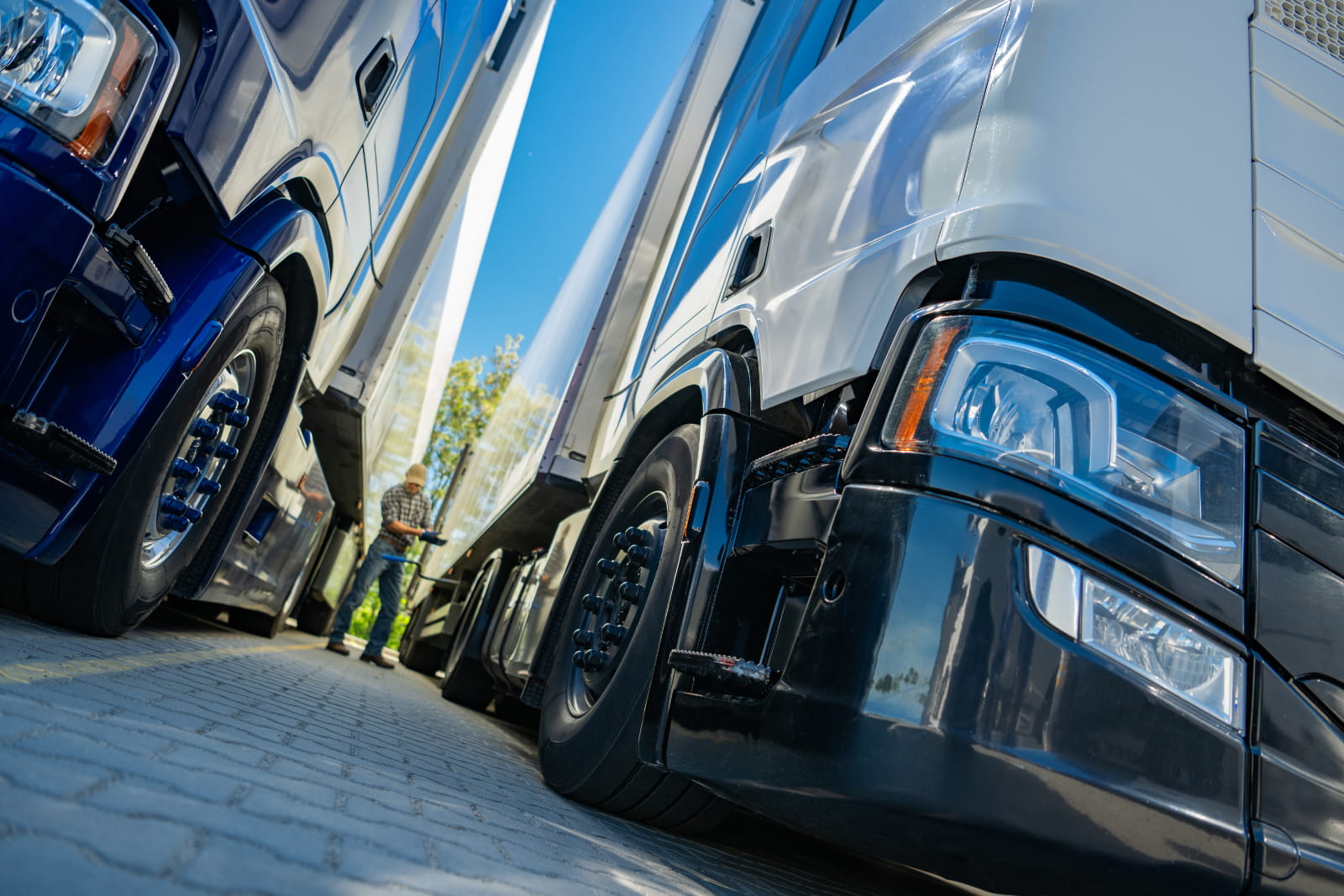
How a Tail Lift Can Assist With High-Load Capacity
A tail lift gives commercial vehicles a practical way to move heavy goods between ground level and the load floor without relying entirely on loading docks, forklifts or manual lifting. For fleets carrying pallets, machinery, appliances, furniture and other bulky goods, the right lifting system can make demanding delivery work safer, faster and easier to manage.
High-load applications require more than simply choosing the strongest lift available. Operators need to consider lifting capacity, load position, platform size, vehicle payload, chassis suitability and how frequently the equipment will be used. Understanding these factors helps businesses select a system that can handle real working conditions reliably.
How Does a Tail Lift Handle Heavy Loads?
A hydraulic tail lift normally combines an electric motor, hydraulic pump, fluid reservoir, cylinders and a load-bearing platform. The vehicle’s electrical system powers the motor, which drives the hydraulic pump and sends pressurised fluid into the cylinders. The cylinders then move the lifting arms or platform between ground level and the vehicle floor.
This hydraulic system allows heavy loads to move in a controlled way rather than relying on employees to lift them manually. Commercial lift capacities vary substantially, with many truck-focused systems handling between approximately 1,000 and 3,000 kg. Specialist lifting systems can go considerably higher depending on vehicle design and application.
Key elements involved in high-load lifting include:
- Hydraulic cylinders: Generate the force required to raise and lower the platform.
- Electric motor and pump: Supply hydraulic pressure when the lift is activated.
- Load-bearing platform: Supports the cargo throughout the lifting cycle.
- Lifting arms or guides: Keep the platform moving in a controlled direction.
- Hydraulic valves: Regulate movement and help control lifting and lowering.
- Electrical controls: Allow the operator to manage platform movement safely.
- Mounting structure: Transfers lifting forces into the vehicle chassis.
These systems work together, so the overall performance depends on more than the headline capacity figure. A lift rated for 2,000 kg still needs the correct chassis installation, electrical supply and load positioning to work as intended.
Businesses should therefore assess the complete lifting system rather than treating capacity as an isolated specification. Regular maintenance of the hydraulic, structural and electrical components is also important because high-load applications place greater demands on each part of the mechanism.
Why Is Tail Lift Capacity Important?
Every tail lift has a rated capacity that identifies how much weight it can handle under defined operating conditions. Commercial truck systems often sit in the 1,000 to 3,000 kg range, while the wider Dhollandia lifting portfolio extends from approximately 150 kg to 16,000 kg across different applications. This broad range shows why matching the lift to the actual workload is so important.
A fleet regularly moving 1,500 kg loads should not choose a system simply because its nominal rating appears close to the requirement. Capacity should provide a sensible working margin and should be assessed together with load centre, platform dimensions and frequency of use.
High-load operations can involve dozens of lifting cycles during a working day. A lift that is constantly operating near its maximum rating may experience greater mechanical stress than one properly matched to the normal cargo profile. Correct specification can therefore support both reliability and equipment life.
How Does Load Position Affect Tail Lift Capacity?
Rated lifting capacity depends partly on where the load sits on the platform. Manufacturers specify a load centre that defines the distance between the cargo’s centre of gravity and the rear of the vehicle. Industry guidance commonly places this reference point around 600 to 750 mm, although the exact figure varies by model.
Moving a heavy load farther away from the truck increases leverage on the lifting mechanism. This places greater force on the hydraulic cylinders, lifting arms, mounting points and vehicle structure. A load that falls below the stated maximum weight may therefore still be unsafe if it is positioned too far towards the edge of the platform.
Operators should consider:
- Load centre: Follow the manufacturer’s specified distance from the vehicle.
- Cargo weight: Confirm the full weight before starting the lift.
- Weight distribution: Keep the load balanced across the platform where possible.
- Platform position: Avoid placing heavy items unnecessarily close to the outer edge.
- Cargo stability: Prevent pallets, cages or machinery from shifting during movement.
- Load diagrams: Use the manufacturer’s capacity chart for the actual load position.
Incorrect positioning can significantly increase mechanical stress even when the load remains within the nominal capacity. This is why operators should understand both weight and centre of gravity rather than relying on a single number printed on the equipment.
Training should also cover how different cargo types affect load distribution. A dense machine, for example, can concentrate substantial weight in a small area, while a large pallet may spread the same total mass differently across the platform.
Which Tail Lift Types Work With High Loads?
Cantilever lifts are among the most common options for demanding commercial work. Dhollandia SA’s cantilever range includes models from approximately 500 kg to 3,000 kg, making them suitable for a wide range of truck and distribution applications.
Slider lifts are another strong option where rear access needs to remain clear. Dhollandia SA’s slider systems cover capacities from around 1,000 to 3,000 kg and retract beneath the vehicle when not in use. This configuration can suit fleets that alternate between loading docks and ground-level unloading.
Column lifts also provide stable vertical movement for bulky or demanding loads. Because the platform moves along rear-mounted guides, they can work well in operations where controlled vertical travel is particularly important.
When Does a Cantilever Tail Lift Make Sense?
Cantilever lifts are useful when the lifting platform needs to be available throughout the working day. Dhollandia SA’s DH-LM range spans roughly 500 to 3,000 kg, giving fleets several capacity levels to suit different commercial vehicles.
The platform generally stores vertically at the rear of the vehicle. This provides a large lifting surface but can restrict direct rear access when the platform is closed, so operating conditions should be considered carefully.
For fleets that mainly load and unload away from docks, this configuration can provide a straightforward high-capacity solution. Matching the model to the expected cargo weight can help avoid unnecessary equipment weight while still providing sufficient lifting capability.
When Is a Slider Tail Lift More Suitable?
Slider lifts retract underneath the chassis when not required, helping preserve clear access to the rear doors. Dhollandia SA offers slider systems rated from approximately 1,000 to 3,000 kg.
This can be valuable for trucks working across mixed delivery environments. A vehicle may load through a warehouse dock in the morning and later unload at customers without any fixed lifting equipment.
Keeping the lift beneath the vehicle also reduces interference with rear access during conventional loading. Businesses should still assess ground clearance, chassis layout and rear overhang because these factors can affect whether a slider system is suitable.
How Does a Tail Lift Reduce Manual Handling?
A tail lift reduces the need for employees to raise heavy goods manually between ground level and a truck floor. Instead, the cargo can be rolled or positioned onto the platform using pallet trucks, trolleys or suitable handling equipment, while the hydraulic system performs the vertical movement.
This becomes especially important with loads that would require several workers to move manually. Manufacturer-reported figures from the broader tail-lift industry suggest that some loads previously requiring 3 or 4 workers may be handled by a single operator when suitable lifting equipment is available.
Practical manual-handling benefits include:
- Less lifting: Employees do not need to raise heavy goods to truck-floor height.
- Reduced carrying: Cargo can move directly from the platform to the vehicle.
- Lower physical strain: Repetitive lifting and lowering requirements are reduced.
- Better delivery access: Drivers can unload at sites without forklifts or docks.
- Smaller handling teams: Some loads may require fewer workers when suitable equipment is used.
- Improved consistency: Mechanical lifting provides a repeatable movement for each delivery.
A reduced need for manual handling can be particularly valuable in multi-drop distribution, where employees may repeat the same loading movements many times during a single shift. Even modest reductions in lifting effort can become significant when multiplied across dozens of deliveries.
Mechanical lifting does not remove all handling risks. Operators still need to position loads correctly, control wheeled cargo and avoid crush areas around the platform. The strongest results come from combining appropriate equipment with clear operating procedures.
How Can a Tail Lift Improve High-Load Delivery Efficiency?
A high-capacity lifting platform gives a commercial vehicle its own method of moving cargo vertically. This reduces dependence on site-specific equipment and can allow trucks to make deliveries to customers that do not have forklifts or loading bays.
Industry manufacturer data suggests hydraulic lifting systems can reduce loading and unloading cycle times by around 40% to 60% in some applications. These figures will vary significantly according to cargo type, site layout and operating procedure, but they illustrate the potential efficiency gains available when manual handling is reduced.
This flexibility becomes particularly useful for multi-drop transport. A truck can operate at a fully equipped warehouse and later deliver to a smaller site without changing vehicles or arranging additional lifting equipment.
Why Does Platform Size Matter for Heavy Cargo?
Capacity alone does not determine whether a lift can handle a load effectively. Commercial platforms can reach approximately 2 to 2.5 metres in length on larger truck applications, while platform widths can approach the width of the vehicle body.
Large pallets, machinery and roll cages need enough platform area for stable placement. If the load extends too far towards the platform edge, its centre of gravity may move outside the most effective lifting zone even if the weight remains within the lift rating.
Businesses should therefore measure their regular loads as well as weighing them. Selecting the correct platform dimensions makes it easier to position cargo within the required load centre and maintain stability throughout the lifting cycle.
How Does a High-Capacity Tail Lift Affect Vehicle Payload?
A tail lift becomes part of the vehicle’s unladen weight and therefore reduces the payload available for cargo. General industry guidance suggests some commercial systems can weigh approximately 250 to 800 kg depending on their type, capacity and platform design.
For a vehicle operating close to its maximum permissible mass, an additional 500 kg of lifting equipment could materially reduce the amount of saleable cargo carried on each journey. Fleet operators should therefore include lift weight in payload planning before ordering equipment.
This is also why choosing excessive lifting capacity is not always beneficial. A correctly specified system should provide the necessary strength without adding avoidable weight that reduces vehicle productivity.
What Safety Measures Matter When Handling High Loads?
High-load work increases the consequences of incorrect operation, making safety procedures especially important. Operators should know the rated capacity, load centre and correct platform position before starting a lifting cycle.
Cargo also needs to remain stable. Pallets, cages and wheeled equipment can move unexpectedly if the platform tilts or the vehicle is parked on uneven ground, so appropriate restraints and roll-stop features should be used where required.
Important safety measures include:
- Capacity checks: Confirm the cargo does not exceed the safe rating.
- Correct load positioning: Keep the centre of gravity within the required zone.
- Anti-slip surfaces: Help operators maintain secure footing.
- Roll stops: Reduce the chance of wheeled loads leaving the platform.
- Emergency-stop controls: Allow movement to be halted quickly.
- Safety valves: Help control hydraulic movement if a problem occurs.
- Platform lighting: Improves visibility in dark working environments.
- Operator training: Ensures users understand controls, hazards and load limits.
Equipment features support safer operation but cannot compensate for poor procedures. Employees should know where crush and pinch points are located and should never stand underneath a raised platform or unstable load.
Routine inspections also matter. Hydraulic leaks, worn pivots, damaged platforms or faulty electrical components can affect safe lifting performance, particularly when the system is regularly working with heavy loads.
Why Is Maintenance Important for a High-Capacity Tail Lift?
High-capacity lifting places repeated stress on hydraulic cylinders, hoses, pivot points and structural mountings. Regular inspections should therefore check for leaks, wear, cracks, corrosion and damage.
Electrical systems also require attention. The hydraulic power pack depends on reliable electrical supply, so weak batteries, damaged wiring or poor connections can lead to slower or inconsistent operation.
Preventive maintenance becomes increasingly important as lifting cycles increase. A vehicle completing 20 lifts per working day could exceed 5,000 lifting cycles in a year, making regular servicing far more important than it would be on a lightly used vehicle.
Where Can I Buy a Tail Lift With High Load Capacity for Commercial Trucks?
At Dhollandia SA, we supply lifting solutions for commercial vehicles operating across a wide range of load requirements. As the authorised Dhollandia dealer in South Africa, we provide access to a broader product range covering capacities from approximately 150 kg to 16,000 kg across different lifting applications.
For standard commercial trucks, our cantilever and slider ranges include models reaching approximately 3,000 kg. We can help assess vehicle size, cargo weight, platform requirements, rear access, chassis configuration and normal delivery conditions before recommending a suitable system.
Our commercial offering includes:
- Cantilever lifts: Options ranging from approximately 500 to 3,000 kg.
- Slider lifts: Models from approximately 1,000 to 3,000 kg.
- Fold-away lifts: Solutions designed for mixed dock and ground-level deliveries.
- Column lifts: Vertical lifting systems for demanding commercial applications.
- Installation support: Professional fitment suited to the vehicle configuration.
- Maintenance and repairs: Ongoing technical support after installation.
- Warranty assistance: Support for eligible equipment and components.
- 24-hour breakdown support: National assistance when unexpected faults occur.
We operate through branches in Johannesburg, Cape Town, Durban and Port Elizabeth, giving commercial fleets access to local sales and technical support across major South African transport centres.
We also support businesses after the lift has entered service. This includes maintenance, repairs and breakdown assistance, helping operators keep high-capacity lifting equipment reliable throughout its working life.
Choosing the Right Tail Lift for High-Load Work
A tail lift can make heavy commercial deliveries considerably easier by providing controlled hydraulic lifting directly at the vehicle. When the system is matched correctly to the cargo, vehicle and working environment, it can reduce manual handling, improve delivery flexibility and support safer movement of high loads.
Capacity should never be assessed on its own. Load centre, platform dimensions, vehicle payload, chassis design, operating frequency and maintenance requirements all influence how effectively a lifting system performs.
At Dhollandia SA, we can help identify a tail lift suited to your commercial vehicles and normal load requirements. Get in touch with us to discuss your fleet, cargo and preferred lifting configuration, and we can help you choose a practical solution backed by local installation, maintenance and technical support.
FAQs About Tail Lift
A high-load-capacity tail lift is designed to move heavy cargo safely between ground level and the bed of a commercial truck. Depending on the model, commercial systems can handle loads from around 1,000 kg to 3,000 kg, while specialist lifts may support significantly more. The right capacity depends on the truck, cargo weight, load centre, platform size and frequency of use. Operators should avoid choosing equipment based on maximum capacity alone. A properly matched system should provide enough lifting strength for regular loads while remaining compatible with the vehicle’s chassis, payload allowance and normal delivery conditions throughout demanding daily operations.
The right tail lift capacity depends on the heaviest load the truck is expected to handle regularly, not just occasional maximum weights. Businesses should consider pallet weight, machinery, roll cages, appliances or other cargo, then compare this with the manufacturer’s rated capacity and load-centre requirements. A load placed farther from the vehicle can create additional leverage and reduce safe lifting capacity. Vehicle gross weight and remaining payload also matter because the lift itself adds weight. For high-load work, capacity should be selected together with platform size, chassis suitability, expected lifting cycles and operating conditions to avoid unnecessary strain over time.
Several tail lift types can work well for heavy commercial loads, including cantilever, slider and column lifts. Cantilever lifts provide a large rear platform and are often suited to frequent ground-level loading. Slider lifts retract underneath the truck, making them useful when the vehicle also works at loading docks or needs clear rear access. Column lifts move vertically along rear-mounted guides and can suit bulky or demanding cargo. The best choice depends on load weight, platform requirements, chassis layout, ground clearance and delivery environment. Capacity, access and practicality should all be assessed before selecting a particular configuration for daily operations.
A tail lift can improve safety by reducing the amount of manual lifting required when moving heavy goods between ground level and the truck floor. However, safe operation still depends on correct load positioning, proper training and suitable equipment features. Operators should check the rated capacity, follow the load-centre diagram and keep cargo stable throughout the lifting cycle. Features such as anti-slip platforms, roll stops, emergency controls and hydraulic safety valves can provide additional protection. Regular inspections are also important because worn hoses, damaged platforms, faulty electrical components or structural defects can affect safe operation when handling high loads regularly.
For commercial trucks carrying heavy loads, businesses should choose a supplier that can match the tail lift to the vehicle, cargo and working environment. Dhollandia SA supplies a broad range of commercial lifting systems, including cantilever, slider, fold-away and column lifts. Its truck-focused ranges include options reaching approximately 3,000 kg, while the wider Dhollandia portfolio covers capacities from about 150 kg to 16,000 kg across different applications. Dhollandia SA also provides installation, maintenance, repairs, warranty support and 24-hour national breakdown assistance through branches in Johannesburg, Cape Town, Durban and Port Elizabeth. This helps maintain reliable support throughout the equipment lifecycle.