
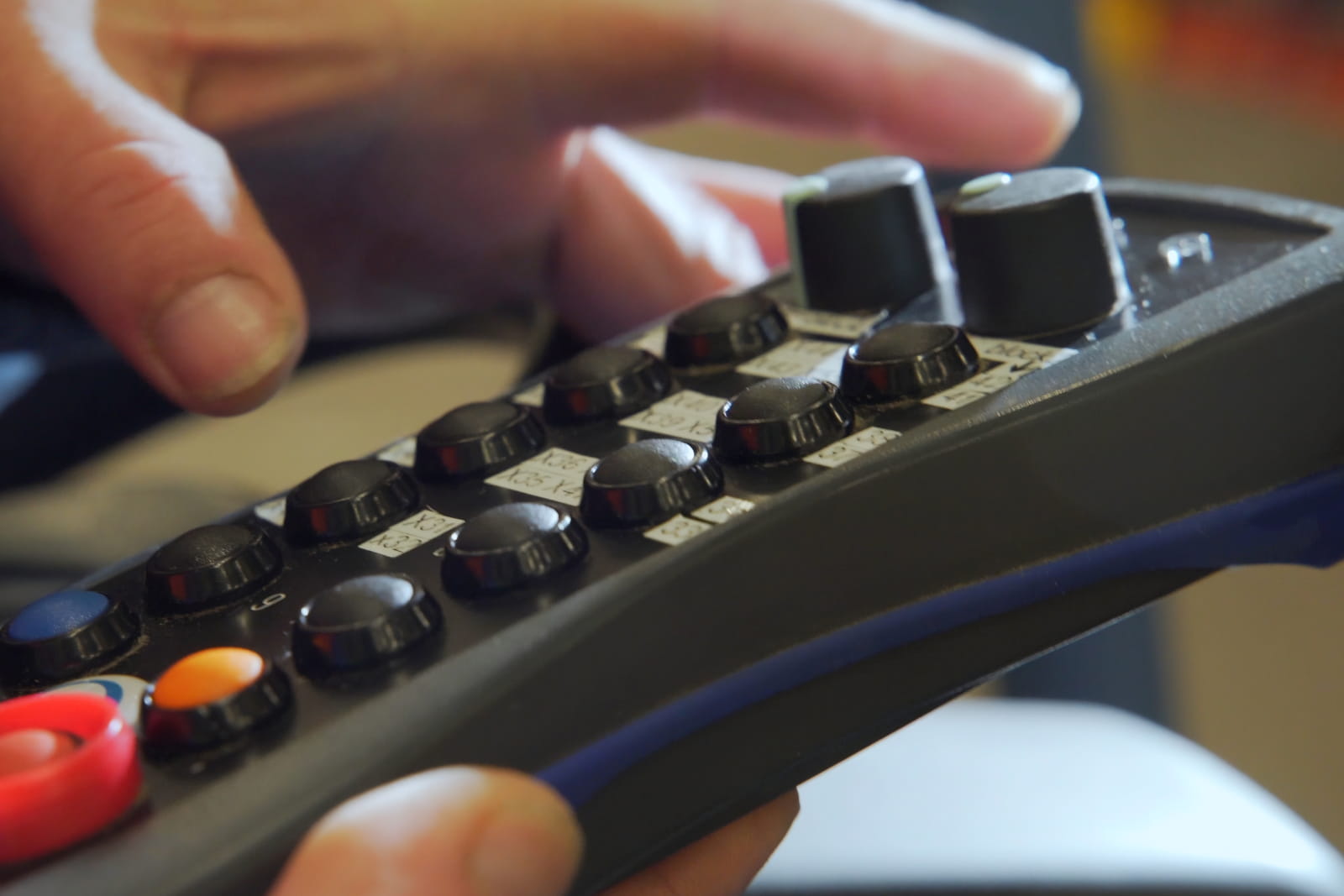
The Benefits of Remote Control Operation for Tail Lifts
Tail lifts are essential for businesses that regularly transport heavy goods, making loading and unloading safer and more manageable. However, traditional fixed control panels can restrict where operators stand during lifting operations. Remote control systems offer a practical alternative, allowing workers to operate the platform from a suitable position around the vehicle. This additional flexibility can improve visibility, reduce unnecessary movement and make daily deliveries more convenient.
Modern remote control systems include wired handheld controllers and wireless radio-operated devices that communicate with the lifting equipment. Depending on the model, operators can raise, lower, tilt or deploy platforms without remaining at a fixed control station. Understanding the benefits of these systems can help fleet managers choose lifting equipment that supports efficient operations without compromising workplace safety.
How Does Remote Control Operation Work for Tail Lifts?
Remote-controlled tail lifts use electrical signals to activate the hydraulic mechanisms responsible for platform movement. Wireless systems typically consist of two components: a handheld transmitter and a receiver connected to the lift’s control system. When the operator presses a button, the transmitter sends a radio signal to the receiver, which activates the corresponding movement. Depending on the equipment, these functions can include raising, lowering, tilting, opening and closing the platform.
Many wireless remote control systems operate within the 2.4 GHz radio frequency band, although other frequencies are also used. Certain systems incorporate frequency-changing technology to reduce communication interference. These features help maintain reliable communication between the controller and the lifting equipment, particularly in environments where several electrically operated devices are present.
Wired handheld controllers provide another option, connecting directly to the lifting equipment through an electrical cable. While they offer less freedom than wireless systems, they allow operation away from the main control panel. Both arrangements must be compatible with the equipment’s electrical supply, hydraulic functions and safety mechanisms. The appropriate choice depends on the vehicle, operating environment and intended loading activities.
1. Improved Operator Safety and Visibility
One of the biggest advantages of remote-controlled tail lifts is improved operator positioning. Traditional fixed controls require operators to remain at a designated location, which may not always provide a clear view of the platform or surrounding area. Remote operation gives workers greater flexibility to select a position where they can monitor platform movement, cargo stability and potential obstacles.
This visibility becomes particularly important when handling large pallets, industrial equipment and awkwardly shaped goods. Heavy-duty commercial lifts can accommodate substantial loads, with certain cantilever models offering capacities of up to 3,000 kg. At these weights, maintaining clear sightlines and understanding how the cargo is positioned are essential for preventing unsafe lifting conditions.
Remote control systems can contribute to safer operations through several practical advantages:
- Better platform visibility: Operators can select a position that provides a clear view of the lifting platform and surrounding hazards.
- Reduced exposure to moving components: Suitable positioning helps operators remain clear of crushing and trapping points.
- Continuous-pressure controls: Compatible systems require operators to maintain button pressure for movement to continue.
- Emergency stopping functions: Appropriate safety mechanisms allow operators to interrupt unsafe platform movements.
- Improved cargo monitoring: Operators can observe load stability throughout lifting and lowering.
These benefits are particularly relevant to busy delivery environments where workers operate close to vehicles, loading docks and other equipment. However, remote controls do not eliminate every safety risk. Workers must still understand the lifting equipment’s operating limits, identify hazardous areas and follow the manufacturer’s instructions.
Businesses should provide practical training before introducing remote-operated equipment. Operators need to understand controller functions, emergency procedures and safe positioning. Regular inspections are equally important because damaged buttons, faulty receivers or unreliable communication can affect equipment performance and safety.
2. Faster and More Efficient Loading and Unloading
Commercial delivery businesses depend on predictable loading and unloading times. Traditional control arrangements may require workers to move repeatedly between the cargo, lifting platform and fixed control station. Remote control operation can reduce some of these unnecessary movements, allowing operators to manage the platform from a convenient position while maintaining visibility of the loading area.
The potential benefit becomes more significant across vehicles completing several deliveries each day. For example, a fleet with 20 vehicles completing 10 deliveries each performs 200 delivery stops daily. Even modest reductions in unnecessary walking or repositioning could improve the overall workflow. This is an illustrative calculation rather than a measured productivity improvement, but it demonstrates why small operational changes deserve attention.
Remote-controlled tail lifts can improve loading efficiency in several ways:
- Fewer unnecessary movements: Operators spend less time walking between fixed controls and loading positions.
- More convenient platform operation: Workers can activate compatible lifting functions from suitable locations.
- Improved cargo positioning: Better visibility helps operators monitor alignment between the cargo and platform.
- Greater flexibility at delivery points: Wireless controllers can support operations where fixed controls are awkward to access.
- More consistent loading procedures: Familiar control arrangements can simplify routine tasks across compatible fleet vehicles.
These advantages are particularly useful in retail distribution, refrigerated transport and commercial logistics. Vehicles operating between warehouses and delivery locations may need to alternate between ground-level unloading and loading dock access. Suitable remote control arrangements can make these transitions more convenient.
However, efficiency improvements should never come at the expense of safety. Operators must avoid rushing platform movements, overloading equipment or operating without a clear view. Fleet managers can assess the value of remote control operation by recording loading times, identifying unnecessary movements and reviewing how different control arrangements affect daily activities.
3. Greater Flexibility in Confined Loading Areas
Commercial vehicles frequently operate in restricted environments, including narrow delivery bays, busy warehouse yards and loading areas with limited space around the vehicle. Fixed control stations may be inconvenient to access in these conditions. Wireless remote controls allow operators to choose a suitable position while remaining within the equipment’s approved operating range.
This flexibility can be useful for vehicles equipped with slider or fold-away tail lifts. Dhollandia’s fold-away range includes models with capacities from 750 kg to 2,000 kg, with configurations designed to store beneath the vehicle chassis. Some models can be installed on trucks and trailers with gross vehicle weights of up to 26 tonnes, depending on their configuration. These designs preserve rear access where vehicles regularly use loading docks.
Remote operation can complement these configurations by making platform movements easier to manage from appropriate positions. However, operators must maintain a clear view and avoid placing themselves between moving equipment and surrounding structures. Businesses should assess available space, loading patterns and vehicle dimensions before deciding which control system provides the safest and most practical arrangement.
4. Reduced Physical Strain During Repeated Operations
Loading and unloading commercial vehicles can be physically demanding, particularly when employees handle goods throughout long delivery shifts. Tail lifts already reduce the need to manually move heavy cargo between ground level and the vehicle floor. Remote control operation can provide further convenience by reducing unnecessary walking and repositioning during repeated lifting cycles.
The physical demands become clearer when considering the equipment’s capabilities. Dhollandia’s DH-RM.20 fold-away lift, for example, can handle loads of up to 2,000 kg when used within its specified limits. Although the hydraulic mechanism performs the lifting, operators still need to position cargo, monitor movements and manage the surrounding workspace. Convenient controls can make these supporting activities easier.
Remote operation can reduce unnecessary physical effort through several features:
- Reduced walking: Operators may spend less time moving between loading positions and control stations.
- Convenient handheld operation: Accessible buttons simplify repeated lifting commands.
- Flexible positioning: Workers can select suitable locations without unnecessary movement around the vehicle.
- Better visibility of cargo: Operators can monitor loads without repeatedly repositioning themselves.
- Practical controller designs: Ergonomic housings and protective materials can improve handling in demanding environments.
These advantages can be particularly valuable for employees who regularly handle palletised goods, roll containers and other commercial loads. Reducing unnecessary movements may make repetitive loading activities more manageable, especially when vehicles complete numerous stops throughout the working day.
Remote controls do not eliminate manual handling risks, however. Workers must still use correct loading techniques, appropriate equipment and safe cargo positioning procedures. Businesses should also provide training on controller handling and ensure employees understand when additional assistance is required.
5. Better Control When Handling Different Types of Cargo
Commercial cargo varies considerably in weight, size and stability. Palletised goods, machinery and fragile equipment can require different approaches to loading and unloading. Remote-controlled tail lifts allow operators to choose positions that provide better visibility of these loads while managing platform movements. This can support more careful handling, particularly when cargo requires accurate alignment with the vehicle floor.
Some electronic control systems also support smoother hydraulic movements through controlled electrical outputs. This can help operators manage platform positioning, although the level of control depends on the equipment’s hydraulic design and electronic configuration. Heavy-duty cantilever models such as the DH-LM.30 use four hydraulic cylinders, with two dedicated to lifting and two to tilting. This arrangement supports platform stability and controlled movement.
Operators must still respect the equipment’s rated lifting capacity and load-centre requirements. A lift rated for 3,000 kg cannot necessarily handle that weight in every loading position. Cargo dimensions, weight distribution and the distance between the load and lifting mechanism all influence safe operation. Remote controls improve convenience, but correct loading practices remain essential.
6. Compatibility With Different Tail Lift Configurations
Remote control systems can be used with different types of tail lifts, provided the equipment supports the necessary electrical connections and safety functions. Businesses should not assume that one remote controller will work with every lifting mechanism. Each lift category has different platform movements, mounting arrangements and operational requirements that influence control system selection.
Dhollandia’s commercial range demonstrates these differences. Cantilever lifts offer capacities from 500 kg to 3,000 kg, while the listed slider models range from 1,000 kg to 3,000 kg. Fold-away lifts provide under-chassis storage, and column lifts offer controlled vertical lifting. These different designs require control configurations suited to their individual operating mechanisms.
The following considerations are important when evaluating compatibility:
- Cantilever lifts: Remote controls may support convenient lifting and tilting operations where approved.
- Slider lifts: Compatible controls can assist operators during platform deployment, lifting and retraction.
- Fold-away lifts: Remote operation may provide greater flexibility when managing platform movements around loading docks.
- Column lifts: Suitable controllers can support vertical lifting while allowing operators to monitor cargo positioning.
- Electrical compatibility: Controllers must match the equipment’s operating voltage and control architecture.
- Safety requirements: Every installation must preserve the required emergency functions and operating safeguards.
Vehicle specifications must also be considered. Commercial tail lift systems commonly use 12 V or 24 V electrical supplies, depending on their configuration. Installing an incompatible controller can create operational problems or interfere with essential safety mechanisms.
Businesses considering remote control upgrades should arrange a professional assessment before purchasing accessories. A technician can examine the existing lift, identify approved control options and determine whether additional components are necessary. This is particularly important when upgrading older equipment or standardising controls across vehicles with different lifting systems.
7. Easier Operation for Busy Commercial Fleets
Fleet managers need lifting equipment that employees can operate consistently across different vehicles and delivery locations. Remote control systems with clearly identified buttons can simplify daily tasks by making the available functions easier to access. Wireless arrangements also reduce dependence on a single fixed operating position, which can be valuable when loading conditions change throughout the working day.
Operating requirements can differ significantly between vehicles. A light commercial delivery vehicle may only need a lift rated for several hundred kilograms, while a larger distribution truck may use equipment capable of handling 3,000 kg. The operator’s training must therefore address the specific lifting capacity, platform movements and control arrangement of each vehicle. A familiar controller does not mean every tail lift operates identically.
Businesses can improve consistency by developing standard operating procedures, checking control equipment before shifts and keeping accurate maintenance records. Wireless controllers should have designated storage locations, and damaged or unreliable devices must be reported immediately. These practices help prevent avoidable disruptions while ensuring staff understand the equipment they operate.
8. Simplified Inspections and Long-Term Maintenance
Remote control systems require regular inspection alongside the tail lift’s hydraulic and mechanical components. Wireless controllers depend on reliable transmitter and receiver communication, while wired controls require properly maintained cables and electrical connections. Routine checks should identify damaged housings, worn buttons, loose connections and signs of moisture exposure before they affect equipment performance.
Electrical specifications are particularly important when assessing replacement controllers or compatible accessories. Some commercial radio control equipment operates across a 9 V to 36 V DC supply range, while individual tail lift hydraulic systems may use 12 V or 24 V power units. These figures demonstrate why components must be checked against the manufacturer’s requirements rather than selected according to appearance or general functionality.
Maintenance should also include hydraulic cylinders, safety valves, platform hinges and lubrication points. Dhollandia’s heavy-duty lift designs incorporate features such as protected piston rods, accessible grease nipples and corrosion-resistant finishes to support long-term operation. Businesses should follow the recommended service schedule, adjust inspections according to operating conditions and remove faulty equipment from service until it has been assessed.
Where Can I Get a Tail Lift With Remote Control Operation?
At Dhollandia SA, we supply commercial lifting solutions designed for different vehicles, cargo requirements and loading environments. As the authorised South African dealer for Dhollandia, we offer cantilever, slider, fold-away and column lifts, with specialist van and passenger solutions available by special order. We help businesses identify suitable lifting equipment and assess which remote control options are compatible with their operational needs.
Our wider product offering includes lifting capacities ranging from 150 kg to 16,000 kg, providing options for light commercial applications and demanding industrial operations. We understand that selecting the right equipment involves more than choosing a lifting capacity. Vehicle compatibility, platform dimensions, control functions and safety requirements all influence the final configuration.
We support customers through the following services:
- Tail lift selection: We help businesses identify suitable lifting equipment for their vehicles and cargo.
- Remote control compatibility guidance: We assess available control options for specific lifting configurations.
- Professional installation: We provide installation services that consider vehicle specifications and operational requirements.
- Maintenance and repairs: We service hydraulic, electrical and mechanical lifting equipment.
- National breakdown assistance: We provide 24-hour breakdown support for commercial customers.
- Ongoing technical expertise: Our experienced team assists customers with equipment performance, maintenance and safe operation.
We operate through four South African branches in Johannesburg, Cape Town, Durban and Port Elizabeth. This national presence allows us to support businesses operating commercial vehicles across different regions. Our team has more than 20 years of combined experience in lifting equipment supply, installation and maintenance.
We also service and repair tail lifts manufactured by other brands, helping businesses maintain existing equipment alongside new installations. Whether a fleet requires a heavy-duty lifting solution or wants to explore remote operation for an existing vehicle, we can help identify suitable options based on the equipment’s specifications and operational requirements.
Making Tail Lifts Safer and More Convenient
Remote-controlled tail lifts can improve loading operations by providing greater flexibility, better visibility and more convenient platform control. These benefits are particularly valuable for commercial fleets managing frequent deliveries, heavy cargo and restricted loading environments. However, choosing the correct control arrangement is essential. Equipment compatibility, operator training and regular maintenance must remain priorities to ensure safe and reliable performance.
At Dhollandia SA, we help businesses find tail lifts that meet their practical lifting requirements while supporting long-term equipment reliability. From selecting suitable models and assessing remote control compatibility to installation, repairs and ongoing maintenance, we provide the expertise needed to support commercial operations. Contact Dhollandia SA today to discuss your fleet’s lifting requirements and discover how we can help make loading and unloading safer, easier and more efficient.
FAQs About Remote Operation for Tail Lifts
Yes, many existing tail lifts can be upgraded with wireless remote control systems, provided the equipment is compatible. The feasibility depends on the lift’s electrical configuration, hydraulic controls, safety mechanisms and manufacturer specifications. Some installations require additional receivers, wiring or approved control components. A qualified technician should inspect the equipment before recommending an upgrade to ensure all existing safety functions remain operational. Wireless controllers must also be configured correctly to prevent unintended platform movements. Dhollandia SA can assess existing lifting equipment and advise businesses on suitable remote control options, helping improve convenience without compromising operational safety or equipment reliability.
Wireless remote controls can provide safe operation when properly installed, maintained and used according to manufacturer instructions. They allow operators to choose positions with better visibility of the lifting platform, cargo and surrounding hazards. Many systems incorporate continuous-pressure buttons, emergency stopping functions and safeguards against unintended activation. However, wireless operation does not eliminate risks such as crushing, trapping or unstable cargo. Operators must remain clear of moving components and maintain an unobstructed view throughout lifting activities. Regular equipment inspections, practical operator training and suitable maintenance procedures are essential for keeping remote-controlled tail lifts safe during everyday commercial loading and unloading.
Wired remote controls connect directly to tail lifts through electrical cables, allowing operators to manage platform movements away from fixed control panels. Their operating distance is limited by cable length, but they do not depend on radio communication. Wireless systems use handheld transmitters and receivers to communicate through radio signals, providing greater freedom of movement around vehicles. Both arrangements can operate lifting, lowering and other supported functions, depending on equipment specifications. Wireless controllers may require battery checks and communication testing, while wired alternatives need regular cable inspections. The most suitable option depends on loading conditions, vehicle compatibility and safety requirements.
Remote-controlled tail lifts require regular maintenance to ensure their electronic, hydraulic and mechanical components operate reliably. Wireless controllers should be checked for battery condition, damaged buttons, moisture exposure and communication problems. Wired systems need inspections of cables, connections and protective housings. The lifting mechanism also requires routine servicing, including hydraulic fluid checks, lubrication, platform inspections and safety function testing. Maintenance frequency depends on equipment usage, working conditions and manufacturer recommendations. Businesses operating high-volume delivery fleets may require more frequent inspections than occasional users. Professional servicing helps identify developing faults early, reducing unexpected breakdowns and maintaining safe loading operations.
Businesses can contact Dhollandia SA for assistance selecting tail lifts with suitable remote control capabilities. As the authorised South African Dhollandia dealer, we supply cantilever, slider, fold-away and column lifting solutions for commercial vehicles. We assess individual operating requirements, vehicle compatibility and available control configurations before recommending equipment. Our services include professional installation, maintenance, repairs and technical support throughout the equipment’s operational life. With branches in Johannesburg, Cape Town, Durban and Port Elizabeth, we support customers across South Africa. We also provide 24-hour national breakdown assistance, helping businesses maintain reliable lifting equipment and minimise avoidable operational disruptions.